1. Cristiano Ronaldo

  • National Team: Portugal

    Finance Football
  • Club Team: Al Nassr (Saudi Pro League)

    Finance Football
  • Estimated Annual Earnings: $280 Million

Salary Breakdown & Sponsorships

Even at 41 years old, Cristiano Ronaldo remains the undisputed financial titan of global sports, topping the Forbes charts with a staggering $280 million in total seasonal earnings. His on-field salary at Saudi Arabia’s Al Nassr sits at a mind-boggling $230 million per year. Off the field, he continues to collect an additional $50 million annually.

Finance Football
  • Major Sponsorships: Nike (Lifetime deal), Binance, Herbalife, Clear Haircare, Whoop.

    The Business Standard
  • Business Ventures: CR7 brand (hotels, gyms, fragrance, underwear), UR Cristiano YouTube channel.

    Finance Football

Why They Earn So Much & World Cup Impact

Ronaldo’s earnings reflect his status as the most visible human being on earth, boasting over 1 billion followers across social media platforms. He is an advertising dream; a simple product placement on his feed moves global markets. For Portugal at the 2026 World Cup, his presence is as much a commercial masterstroke as it is a sporting narrative. While his tactical role on the pitch has shifted toward a specialized focal point, his leadership, elite physical preparation, and unparalleled clutch history make Portugal a primary focal point for global broadcasters.

Finance Football

2. Lionel Messi

  • National Team: Argentina

    Finance Football
  • Club Team: Inter Miami (MLS)

    Finance Football
  • Estimated Annual Earnings: $130 Million

Salary Breakdown & Sponsorships

Lionel Messi’s move to Major League Soccer redefined the financial infrastructure of North American soccer. His on-field compensation from Inter Miami is listed at roughly $60 million. However, it is his off-field portfolio, yielding $70 million annually, that pushes his total income to $130 million.

International Business Times+ 1
  • Major Sponsorships: Adidas (Lifetime partnership), Apple TV (Revenue share), Mastercard, PepsiCo/Lay’s, Bitget.

    International Business Times
  • Business Ventures: MiM Hotels, Más+ by Messi (hydration drink), MGO Global.

    Finance Football

Why They Earn So Much & World Cup Impact

Messi earns a premium because his value is tied directly to equity and ecosystem growth. His contract with Inter Miami uniquely includes revenue-sharing components from Apple’s MLS Season Pass and Adidas merchandise sales, an unprecedented structural model in football history. As the defending World Cup champion leading Argentina on North American soil, Messi’s cultural influence is unmatched. He enters the 2026 tournament as the spiritual and tactical heartbeat of the Albiceleste, dictating play from the midfield and drawing capacity crowds to every stadium he graces.

3. Kylian Mbappé

  • National Team: France

  • Club Team: Real Madrid (La Liga)

  • Estimated Annual Earnings: $95 Million

Salary Breakdown & Sponsorships

Kylian Mbappé’s highly anticipated move to Real Madrid came with a significant baseline salary, bringing his on-field income to around $70 million per season when factored across a spread signing bonus. Off the pitch, his commercial appeal is skyrocketing, raking in an additional $25 million.

  • Major Sponsorships: Nike, Hublot, Oakley, EA Sports FC.

  • Business Ventures: Zebra Valley (production company), tech and luxury investments (Wristcheck).

Why They Earn So Much & World Cup Impact

Mbappé is the prime generational crossover superstar bridging the gap between old-guard legends and the new wave. He owns his image rights fiercely, ensuring every corporate partnership aligns with his premium personal brand. On the international stage, Mbappé is France’s absolute lethal weapon. His devastating pace and clinical execution make him the terror of opposition defenses. Having already won a World Cup and scored a hat-trick in another final, the 2026 tournament is his platform to cement his status as the premier player of his generation.

4. Neymar Jr.

National Team: Brazil
Club: Santos

Estimated Earnings: $110 Million

Despite injuries affecting recent seasons, Neymar continues to generate substantial commercial revenue.

Major Sponsorships

  • Puma
  • Red Bull
  • Blaze
  • Various Brazilian brands

Impact on Brazil

When healthy, Neymar remains one of the most creative attacking players in world football.

5. Erling Haaland

  • National Team: Norway

  • Club Team: Manchester City (Premier League)

  • Estimated Annual Earnings: $80 Million

Salary Breakdown & Sponsorships

The most ruthless goalscorer in English football commands a massive financial package at Manchester City. Thanks to heavily incentivized performance structures, Haaland takes home roughly $60 million on the pitch. His explosive off-field growth brings in an extra $20 million annually.

  • Major Sponsorships: Nike (Massive long-term boot deal), Samsung, Breitling, Hyperice.

  • Commercial Image: Known for his unique Scandinavian aesthetic and bio-hacking health lifestyle, which appeals to modern wellness brands.

Why They Earn So Much & World Cup Impact

Haaland’s financial power stems from pure productivity. His ability to break Premier League scoring records ensures maximum payout from club bonus clauses, while his young age makes him a premium long-term asset for major global brands. For Norway, Haaland is an absolute game-changer. Carrying the weight of his country’s aspirations, his presence forces opposing international managers to completely alter their defensive structures, giving Norway a genuine puncher’s chance against any heavyweight elite nation.

6. Vinícius Júnior

  • National Team: Brazil

  • Club Team: Real Madrid (La Liga)

  • Estimated Annual Earnings: $60 Million

Salary Breakdown & Sponsorships

Vinícius Júnior has ascended into the upper echelon of both sporting and commercial prominence. At Real Madrid, his on-field salary sits comfortably at $40 million. Off the field, his vibrant personality and cultural activism generate a cool $20 million annually.

  • Major Sponsorships: Nike, Pepsi, Hugo Boss, Prada Eyewear, PlayStation.

  • Social Initiatives: The Vini Jr. Institute (educational tech app for underprivileged Brazilian youth).

Why They Earn So Much & World Cup Impact

Vinícius is more than just a brilliant winger; he is a massive cultural icon. His continuous stance against racial discrimination in football has elevated his public profile far beyond sports pages, turning him into a highly respected global figure championed by premium luxury fashion and tech brands. For Brazil, Vini Jr. represents the classic “Joga Bonito” flair combined with modern tactical discipline. He is the dynamic creative engine down the left flank for the Seleção, carrying the immense responsibility of bringing the World Cup trophy back to Brazil for the first time since 2002.

7. Mohamed Salah

  • National Team: Egypt

  • Club Team: Liverpool (Premier League)

  • Estimated Annual Earnings: $55 Million

Salary Breakdown & Sponsorships

As the undisputed king of Egyptian football and a living legend at Anfield, Mohamed Salah earns $35 million on the pitch from his Liverpool contract. His unique appeal across the Middle East and African markets nets him a massive $20 million in off-field endorsements.

  • Major Sponsorships: Adidas, Vodafone (Middle East), Pepsi, Uber, DHL.

  • Cultural Clout: A constant figure in global media campaigns, representing a bridging icon between European and Arab sports markets.

Why They Earno Much & World Cup Impact

Salah holds an effective commercial monopoly as the most famous Arab athlete on earth. His endorsement deals are incredibly lucrative because he provides major international brands with direct, positive access to a massive demographic across Egypt and the wider MENA region. When playing for Egypt, Salah is an absolute talisman. His presence on the pitch acts as a massive psychological boost for his teammates, with his elite playmaking and clutch finishing spearheading the Pharaohs’ tactical strategy.

8. Harry Kane

National Team: England
Club: Bayern Munich

Estimated Earnings: $50 Million

Kane continues to be among the most consistent strikers in world football.

Major Sponsorships

  • Skechers
  • Cadbury
  • Amazon

Impact on England

England’s captain remains the focal point of the team’s attack.

9. Jude Bellingham

  • National Team: England

  • Club Team: Real Madrid (La Liga)

  • Estimated Annual Earnings: $44 Million

Salary Breakdown & Sponsorships

Jude Bellingham’s meteoric rise since joining Real Madrid has translated directly to commercial gold. He brings home $29 million on the pitch. Meanwhile, his status as the fresh face of British football has quickly built a $15 million off-field income portfolio.

  • Major Sponsorships: Adidas (Marquee signature line asset), Lucozade, Skims, EA Sports.

  • Public Profile: Routinely praised for his extreme maturity, mental health advocacy, and high-fashion modeling campaigns.

Why They Earn So Much & World Cup Impact

Bellingham is a sports marketer’s dream scenario: articulate, exceptionally talented, emotionally intelligent, and playing for the biggest club in the world. He possesses the rare crossover appeal that satisfies traditional football purists and casual pop-culture fans alike. For England, Bellingham is the modern box-to-box engine room. His tactical flexibility allows him to disrupt opposition midfields, drive transitions, and make late goalscoring runs into the penalty box, making him indispensable to the Three Lions’ championship aspirations.

10. Kevin De Bruyne

National Team: Belgium
Club: Manchester City

Estimated Earnings: $45 Million

One of football’s finest midfielders completes the top ten.

Major Sponsorships

  • Nike
  • Therabody
  • Various European partnerships

Impact on Belgium

His vision and passing ability remain critical for Belgium’s success.

Key Trends Among Football’s Highest Earners

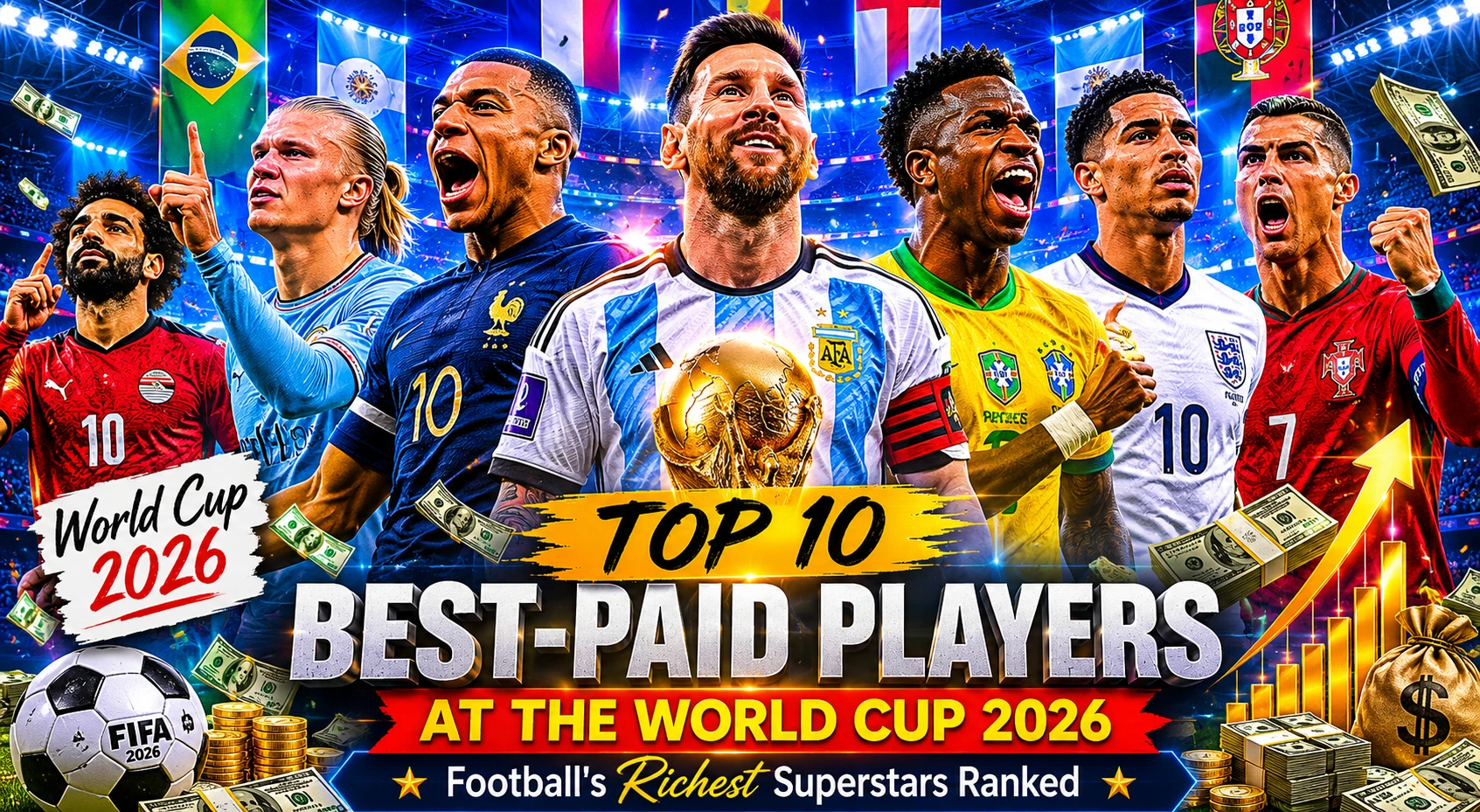
The eye-watering numbers seen across the Top 10 Best-Paid Players at the World Cup 2026 point to broader, systemic shifts within sports economics. The modern landscape of football wealth is driven by four primary macroeconomic factors:
1. The Middle East Financial Ecosystem

The emergence of the Saudi Pro League has completely disrupted the historical wage hierarchy of European club football. By offering massive, tax-free nine-figure base salaries, the Gulf region has enabled elite veterans to build wealth packages that would be financially impossible under European Financial Fair Play constraints.

2. The Rise of Global Lifestyle Branding

The top-tier earners are no longer just endorsing football boots; they are partnering with luxury fashion houses (Prada, Fendi, Louis Vuitton), high-end watchmakers (Hublot), and specialized consumer tech companies. Footballers have crossed over into traditional Hollywood celebrity spaces, amplifying their off-field commercial income significantly.

3. Structural Equity in North America

Lionel Messi’s historic MLS contract proved that modern superstars can demand more than just fixed wages. The integration of corporate revenue sharing, streaming subscription bonuses, and long-term club equity options will likely become standard leverage points for elite icons seeking club transfers moving forward.

4. Direct Digital Engagement (The Creator-Athlete)

A player’s financial value is directly correlated with their digital footprint. Players like Cristiano Ronaldo launching standalone personal YouTube networks and digital communities allow athletes to bypass traditional media houses entirely, monetizing their massive fan bases directly and commanding higher corporate sponsorship retainers.

Which Player Could Earn the Most After the World Cup?

While veterans like Ronaldo and Messi dominate the absolute top of the current ledger, the 2026 World Cup serves as a primary financial launchpad for the next generation of football stars. Historically, a breakout performance at a World Cup can instantly double a player’s commercial value and trigger record-breaking club transfer battles.

[The Next Financial Superstars]
1. Jude Bellingham -> Positioned to command massive premium UK/US brand expansions.
2. Lamine Yamal    -> Extreme youth gives him a 15-year runway for corporate equity.
3. Vinícius Júnior -> The natural heir to Brazil's global commercial marketing crown.

Among the current top earners, Jude Bellingham and Lamine Yamal possess the highest commercial upside following the tournament. If England makes a deep run driven by Bellingham’s midfield performances, his marketing appeal throughout the UK, Europe, and North America will hit unprecedented heights, potentially challenging the off-field earnings of the old guard.

Similarly, Yamal is just starting his journey at the elite corporate endorsement level. A dominant, tournament-defining showing from the teenage phenom would allow his management team to command top-tier, multi-million dollar deals, making him the financial face of global football for the next decade.

Frequently Asked Questions (FAQ)

Who is the highest-paid player at the World Cup 2026?

Cristiano Ronaldo is the highest-paid player participating in the World Cup 2026, bringing in an estimated total of $280 million per season. This is driven by his massive $230 million annual on-field salary with Al Nassr and $50 million from off-field commercial endorsements.

How much do World Cup players earn?

World Cup player earnings vary wildly depending on their club contracts and endorsement portfolios. While elite superstars earn anywhere from $40 million to over $200 million annually, the average player at the tournament earns a club salary between $2 million and $10 million per year.

Do players get paid for playing in the FIFA World Cup?

Yes, players receive performance-based pay for participating in the tournament. FIFA distributes millions of dollars to each participating national federation. The national associations then allocate a percentage of those funds directly to the players as match fees, appearance bonuses, and tournament progress incentives.

Which footballer has the highest endorsement income?

Lionel Messi leads the football world in pure off-field endorsement income, bringing in roughly $70 million annually through his long-term corporate partnerships with Adidas, Apple TV, Mastercard, and PepsiCo.

Who are the richest footballers in 2026?

The richest active footballers in 2026 by annual revenue are Cristiano Ronaldo ($280 million), Lionel Messi ($130 million), Karim Benzema ($104 million), and Kylian Mbappé ($95 million).

How are football player earnings calculated?

Football player earnings are calculated by combining on-field income (base club salary, guaranteed sign-on fees, and competitive performance bonuses) with off-field revenue (corporate sponsorships, image rights licensing, lifestyle brand deals, and independent personal business ventures).

Final Verdict

The financial landscape surrounding the Top 10 Best-Paid Players at the World Cup 2026 shows that modern football wealth has broken far beyond the limits of traditional club payrolls. Today’s elite footballers are massive, self-sustaining global entertainment brands. The staggering figures brought home by icons like Cristiano Ronaldo, Lionel Messi, and Kylian Mbappé are powered by a perfect economic storm: massive state-funded club investment, global corporate sponsorship deals, and an absolute mastery of digital media landscapes.

As these high-earning stars take the field across North America, the financial metrics fade into the background, leaving only raw, elite athletic competition. Ultimately, no amount of endorsement wealth can buy a World Cup winner’s medal—it must be earned on the pitch, under the bright lights of the world’s biggest sporting stage. Viral link