How the False Nine Position Changed Football Tactics
How the False Nine Position Changed Football Tactics
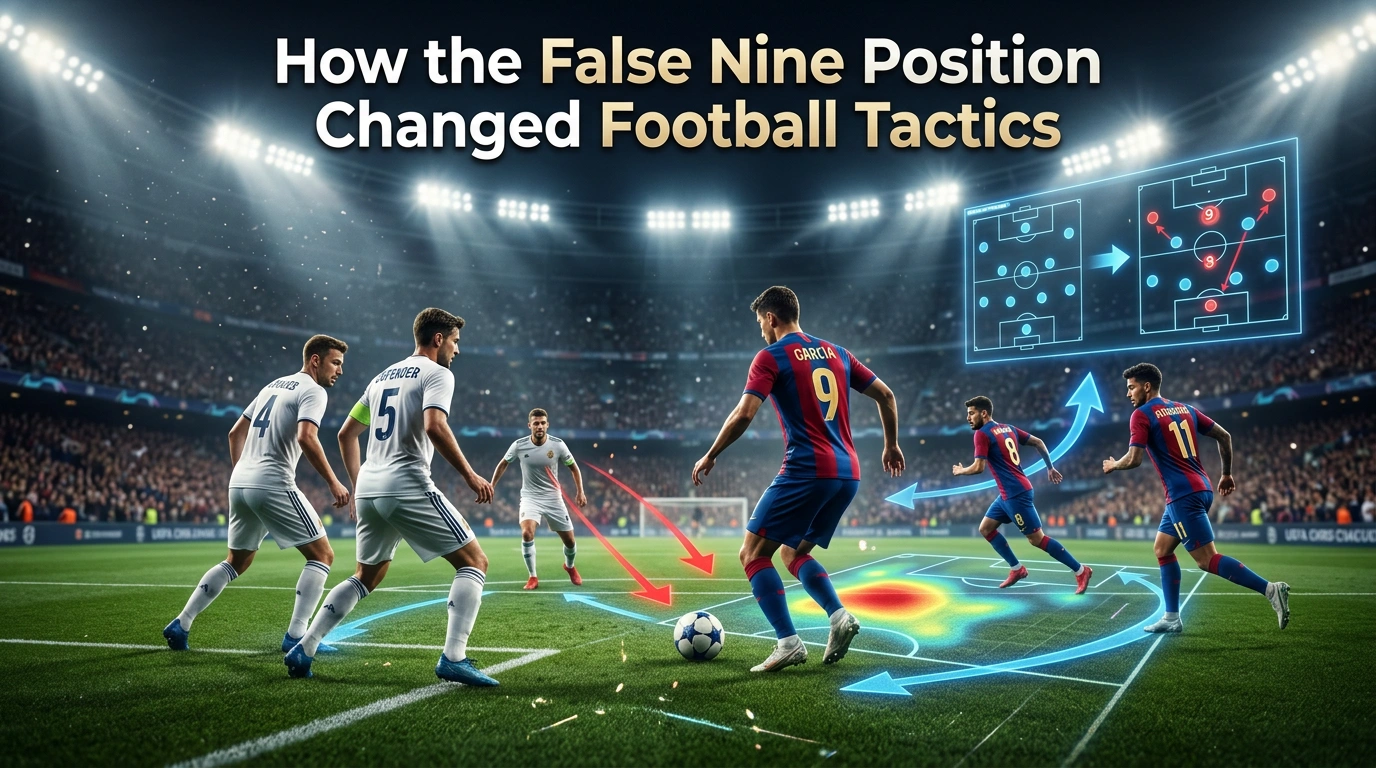
Imagine watching a football match where the central striker suddenly runs away from the opponent’s goal. Instead of sprinting toward the penalty box to score, he drops deep into the midfield. The central defenders of the other team look at each other in confusion. Should they follow him into the midfield, or should they stay in their defensive line? While they hesitate, a speedy winger dashes into the empty space behind them and scores an easy goal.
This simple but brilliant movement is the core of the False Nine Position. For decades, football teams relied on a big, strong striker to lead their attack. This player stood in the box, fought with defenders, and waited for crosses. But tactical innovations changed everything.
One thing I’ve noticed while watching modern football is that many fans think a striker must always stay inside the box. But after watching teams like Barcelona and Manchester City, it becomes clear that movement can be more dangerous than simply waiting for crosses. The introduction of this unique role altered how coaches set up their defense and midfield.
In this article, you will learn how this special position works, its fascinating history, and why it became a cornerstone of Modern Football Tactics. We will also look at the iconic players who mastered the role and changed the sport forever.
What Is a False Nine Position?
In traditional football, the player wearing the number 9 jersey is the main striker. This player is the focal point of the attack. Their main job is to stay close to the opponent’s goal, hold up the ball, and score.
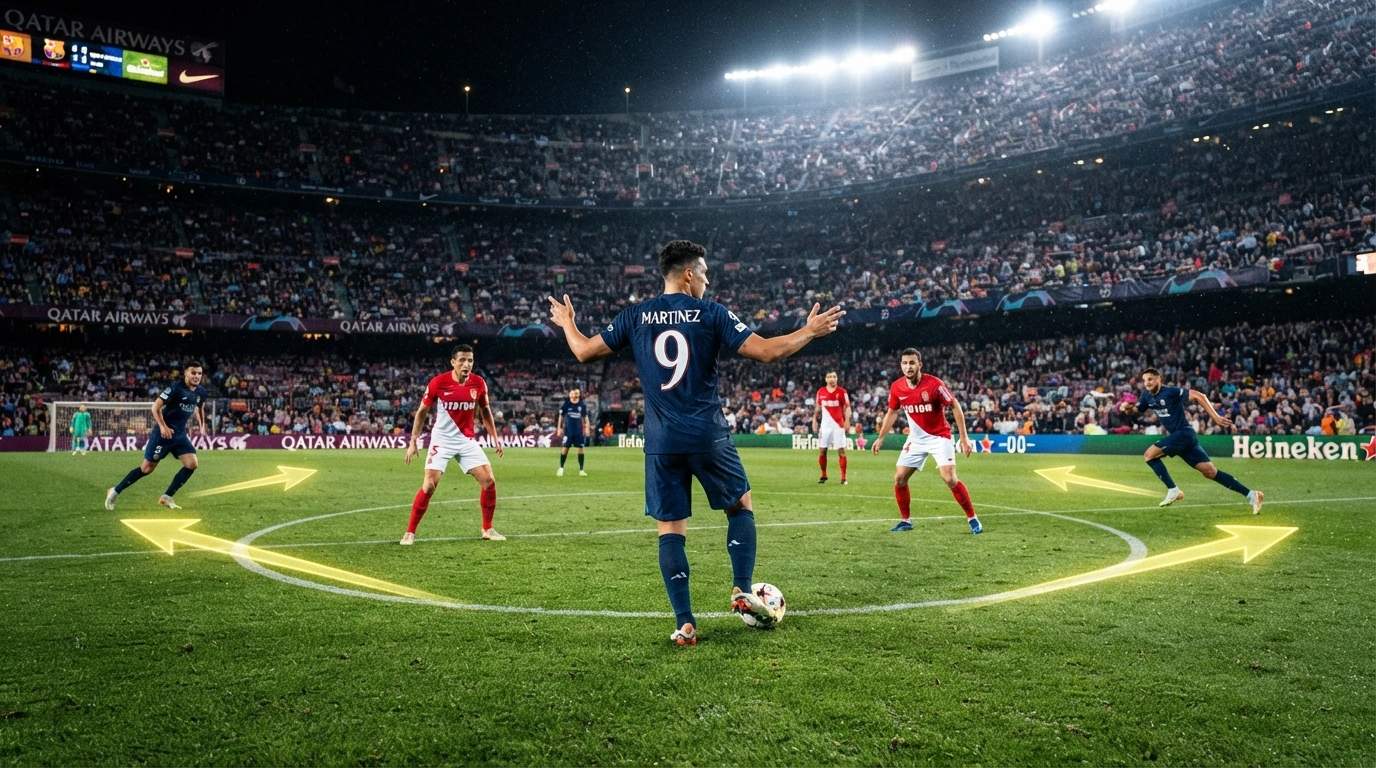
The False Nine Position is completely different. In this setup, the central forward behaves like a creative midfielder. Instead of staying up front, this player drops deep into the midfield space between the opponent’s defensive line and midfield line.
This movement is why we call the position “false.” The player is listed as a striker on the team sheet, but they do not play like one. They act as an extra playmaker, helping their team dominate possession and control the center of the pitch. Greatest Strikers of the 21st Century
How the False Nine Position Works
The main goal of this tactical system is to create space by confusing the opponent’s defense. It creates a tactical dilemma for the opposing team’s center-backs.
Normally, center-backs have a clear player to mark. But when a false nine drops deep, the defenders have to make a difficult choice:
- Option 1: A center-back follows the false nine into the midfield. This leaves a massive hole in the center of the defense. Wingers or attacking midfielders can quickly sprint into this empty space.
- Option 2: The center-backs stay in their defensive line and let the false nine go. This allows the false nine to receive the ball without any pressure. They can turn, face the goal, and play a dangerous pass to their teammates.
This movement creates a numerical advantage, or overload, in the midfield. Instead of three midfielders playing against three, the attacking team now has four players in that area. This makes it much easier to pass the ball and control the tempo of the game.
History of the False Nine
Many fans believe that the false nine is a brand-new invention. However, this strategy actually has deep roots in football history.
The Austrian Wunderteam (1930s)
The earliest version of this role appeared in the 1930s. Matthias Sindelar played as a forward for the famous Austrian national team. Sindelar was a slender player who did not want to fight physically with giant defenders. Instead, he dropped deep into midfield to create plays. This fluid style helped Austria become one of the best teams in Europe.
Hungary’s Golden Generation (1950s)
In 1953, Hungary shocked the world by defeating England 6-3 at Wembley Stadium. The English defenders had no idea how to mark Hungary’s central forward, Nándor Hidegkuti. He wore the number 9 jersey but played deep in the midfield. England’s center-backs stayed in their positions, which gave Hidegkuti the freedom to orchestrate a legendary victory.
Francesco Totti at Roma (2000s)
The modern version of this role emerged under coach Luciano Spalletti at AS Roma. In 2005, Spalletti faced a massive injury crisis with his strikers. He decided to play legendary midfielder Francesco Totti as a lone forward. Totti naturally dropped deep to pick up the ball, creating a highly fluid system that won silverware and played beautiful, attacking football.
Why Coaches Use a False Nine
Coaches use this system because it changes the nature of Football Strategy. It shifts the focus from physical battles to spatial awareness and quick passing.
In Modern Football Tactics, space is very limited. Most defensive teams use a low block. They park their players near their own penalty box to deny space. When a team uses a traditional striker, the defenders can easily mark them.
Using a false nine helps break these defensive structures. It forces defenders to move out of their comfort zones. It also helps teams keep the ball for long periods. If your striker is comfortable passing and keeping possession, your team is much less likely to lose the ball in dangerous areas.
Advantages of Using a False Nine
- Midfield Control: Having an extra player in the middle of the pitch makes it very easy to keep the ball.
- Defensive Confusion: Opposing defenders do not know who to mark, which often breaks their defensive organization.
- Unpredictable Attacks: Goals can come from wingers, midfielders, or the false nine himself, making the team difficult to analyze.
- Better Passing Triangles: The movement of the forward creates constant passing options for teammates.
Disadvantages of Using a False Nine
- Lack of Box Presence: If the false nine drops too deep, there might be no one in the penalty box to finish crosses.
- Requires Elite Technical Skill: The player must have the passing of a midfielder and the finishing of a striker.
- Vulnerability to Physical Teams: If the opponent plays a highly physical game and presses aggressively, the system can struggle.
- Winger Dependency: The system only works if you have fast wingers who are willing to make selfless, diagonal runs.
Ousmane Dembele vs Lamine Yamal
Vinicius Jr vs Haaland Complete Stats
Famous Players Who Mastered the Role
Very few players have the unique skill set required to play this role successfully. Here are the legends of Tactical Football who mastered the position.
Lionel Messi
Lionel Messi is the most famous example of the modern false nine. In May 2009, Barcelona manager Pep Guardiola made a historic decision before a match against Real Madrid. He moved Messi from the right-wing to the center of the pitch as a false nine.
Barcelona won the match 6-2. Real Madrid’s central defenders had no answer for Messi’s movement. Messi went on to score an incredible number of goals from this position, winning multiple Ballon d’Or awards.
Francesco Totti
At AS Roma, Francesco Totti proved that a veteran playmaker could thrive in this role. Totti had incredible vision and a perfect passing range. His ability to play first-time through balls to running wingers made Roma’s attack highly explosive.
Roberto Firmino
Under Jürgen Klopp at Liverpool, Roberto Firmino redefined the defensive duties of a striker. Firmino dropped deep to link up play, but he also pressed opposing midfielders aggressively. His selfless work allowed wingers Mohamed Salah and Sadio Mané to slash inside and score hundreds of goals.
Cesc Fàbregas
During Euro 2012, Spain national team manager Vicente del Bosque used midfielder Cesc Fàbregas in the False 9 Role. Spain did not play with any traditional strikers. Fàbregas helped Spain dominate possession, control matches, and win the European Championship.
How Pep Guardiola Changed Modern Football
You cannot discuss the history of this position without talking about Pep Guardiola. He took a classic tactical concept and popularized it for the modern era.
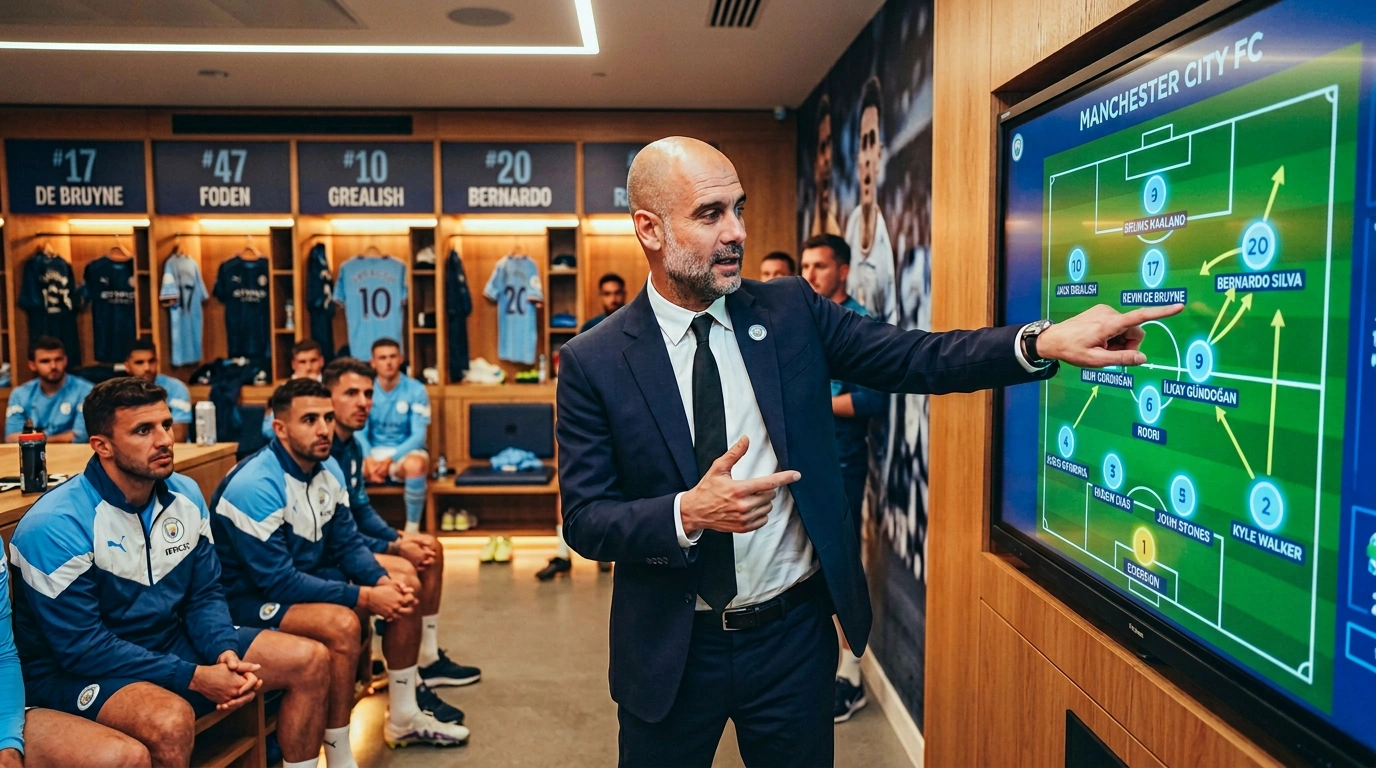
During his time at Barcelona, Pep Guardiola False Nine tactics became the standard for elite football. He realized that keeping the ball was the best way to defend and attack. By playing Messi in the center, he ensured that Barcelona always had a passing option in midfield.
Guardiola continued to use this strategy at Manchester City. Before signing Erling Haaland, City won consecutive Premier League titles by playing midfielders like Kevin De Bruyne, Bernardo Silva, or Phil Foden in the false nine spot. This showed that his tactical philosophy was highly adaptable.
Traditional Striker vs. False Nine
The following table highlights the key differences between these two attacking systems.
| Tactical Feature | Traditional Striker (Target Man) | False Nine (Creative Forward) |
|---|---|---|
| Primary Position | Inside the opponent’s penalty box | Drops deep into the midfield space |
| Main Objective | Score goals and win aerial duels | Create space and link up play |
| Defensive Duty | Stay up front, ready for counter-attacks | Press midfielders and block passing lanes |
| Dribbling Style | Powerful runs behind the defense | Close control and quick turns in tight spaces |
| Passing Style | Lay-offs to midfielders | Creative through balls and quick one-twos |
| Ideal Formations | 4-4-2, 4-3-3, 3-5-2 | 4-3-3, 4-6-0, 4-1-4-1 |
Pros and Cons of the False Nine System
| Advantages | Disadvantages |
|---|---|
| Creates a numerical overload in the midfield area. | Can leave the penalty box completely empty. |
| Forces opposing center-backs to leave their positions. | Requires an extremely rare and expensive player profile. |
| Helps the team control matches through high ball possession. | Heavily dependent on the off-the-ball runs of wingers. |
| Makes the team highly unpredictable in attack. | Struggles against highly compact, low-block physical defenses. |
Is the False Nine Still Effective Today?
As football tactics evolved, defensive coaches learned how to stop the false nine. Modern defensive systems use compact midfields and zonal marking to deny space in the center of the pitch.
This led to a tactical shift. Many elite teams returned to using physical strikers like Erling Haaland, Robert Lewandowski, or Harry Kane. These players offer a constant threat inside the penalty box.
However, the false nine has not disappeared. Instead, it has merged with other roles. Modern strikers are now expected to be highly versatile. They must have the physical presence of a traditional target man, but they also need the technical passing skills of a false nine. The position changed how we view football development forever.
Key Takeaways
- The false nine is a forward who drops deep into midfield to create space and passing options.
- This strategy confuses opposing center-backs by forcing them to make a difficult marking choice.
- Legends like Matthias Sindelar and Nándor Hidegkuti used early versions of this tactic in the 1930s and 1950s.
- Pep Guardiola modernized the role by using Lionel Messi in this position at Barcelona.
- The system requires highly intelligent, technically gifted players and quick wingers who make runs into the empty space.
- While physical strikers have returned to popularity, the modern forward must still possess false nine passing qualities.
Final Thoughts
The development of the False Nine Position represents one of the most exciting chapters in football history. It proved that football strategy is not just about physical strength or speed. It is a game of space, movement, and intelligence.
By pulling defenders out of position, the false nine opened up new ways for teams to attack and control matches. It changed how youth academies train young players, emphasizing technical skill over raw size.
While tactical trends will continue to shift, the lessons of the false nine are here to stay. It showed us that sometimes, the best way to move forward is by taking a step back.
Frequently Asked Questions
What is the difference between a False Nine and a Number 10?
A Number 10 is a traditional attacking midfielder who starts in the midfield and moves forward to support the attack. A false nine starts as a central striker on the team sheet but drops backward into the midfield during the match.
Why is it called a “False” Nine?
It is called “false” because the player wears the number 9 jersey (which traditionally belongs to a central striker) but plays like a midfielder. Their striker role is a deception used to confuse the defense.
Who invented the False Nine in Football?
The tactic was not invented by a single person. Early versions were used by Hugo Meisl with the Austrian national team in the 1930s. It was later refined by Hungary in the 1950s and popularized in the modern era by Luciano Spalletti and Pep Guardiola.
Can any team play with a False Nine?
No, this system is highly complex. It requires midfielders who can rotate positions, wingers who make diagonal runs into the box, and a striker with world-class passing and spatial awareness.
Did Lionel Messi play as a False Nine?
Yes, Messi played this role during his highly successful years under Pep Guardiola at FC Barcelona. It is widely considered the peak era of the false nine tactic.
Why are teams moving away from the False Nine today?
Many modern teams have reverted to traditional strikers because defenses have become better at defending the midfield spaces. Having a physical presence like Erling Haaland inside the box is often more effective against low-block defenses.
Ballon d’Or winners: The History and Complete List
Lionel Messi vs Harry Kane – Complete Statistics Comparison
How the False Nine Position Changed Football



Post Comment