Maradona vs Pele: Who Is the Greatest Footballer of All Time?
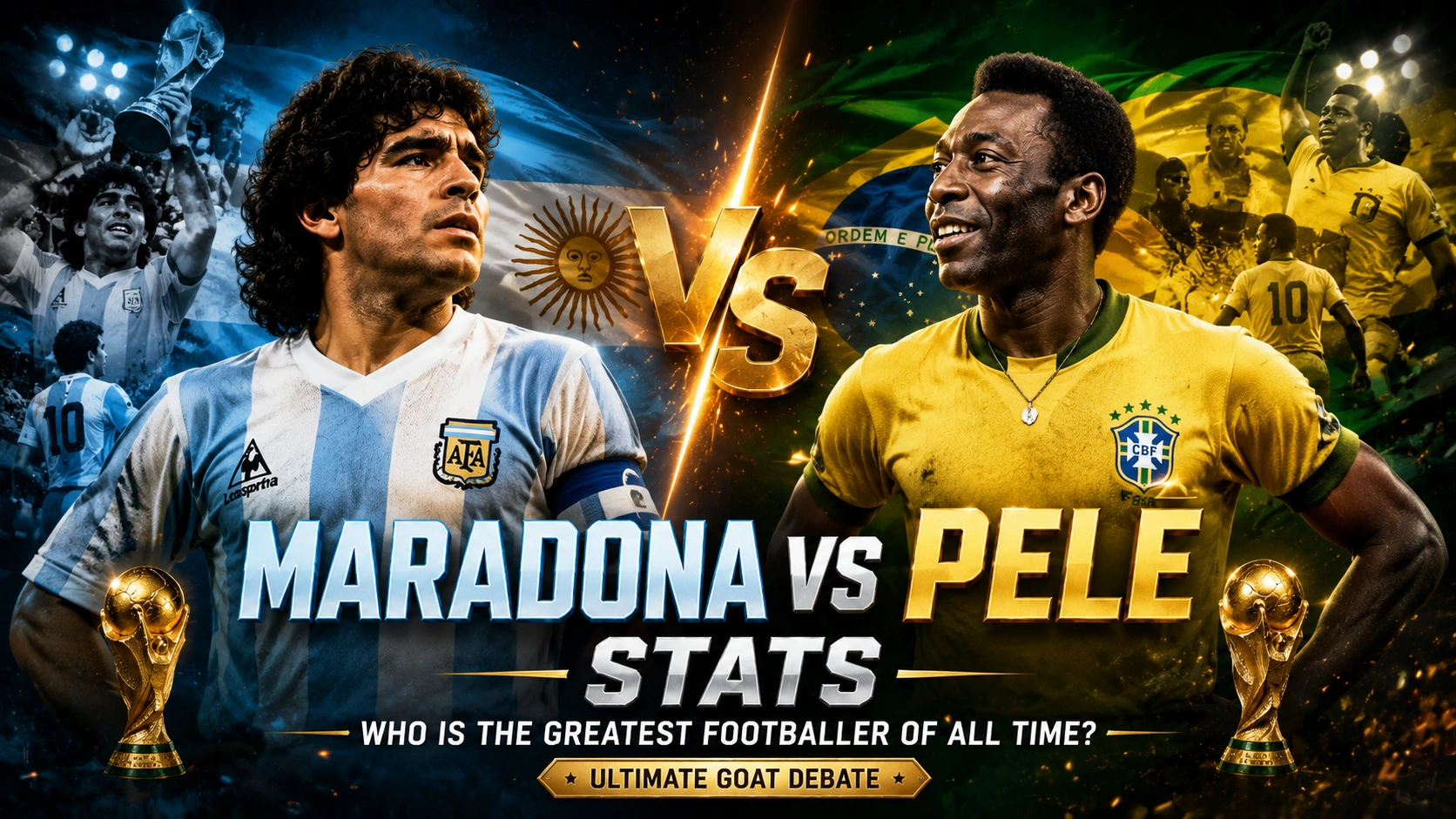
Maradona vs Pele Stats: Who Is the Greatest Footballer of All Time?
If you walk into any sports bar or football stadium in the world and ask, “Who is the greatest player ever?” you will hear two names almost every time: Diego Maradona and Pelé. For decades, the maradona vs pele debate has divided families, friends, and entire countries.
The debate between Maradona vs Pele has raged for decades among football fans worldwide. Both players transcended the beautiful game and became global icons. But who was truly greater?
This question sparks passionate arguments in stadiums, living rooms, and online forums. Some point to Pelé’s three World Cup victories. Others highlight Maradona’s magical 1986 World Cup performance when he almost single-handedly carried Argentina to glory.
In this comprehensive comparison, we’ll examine their careers, statistics, playing styles, and lasting impact on football. Whether you’re a die-hard fan or casual observer, this deep dive into two of football’s greatest legends will give you everything you need to join the debate.
Let’s settle this once and for all—or at least understand why this debate may never truly end.
Who Was Diego Maradona?
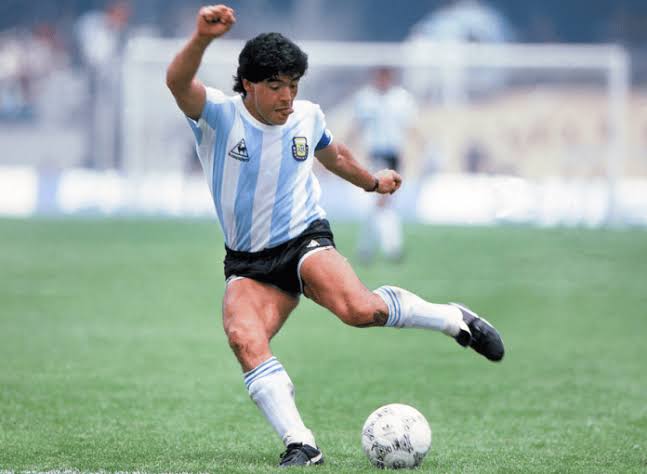
Diego Armando Maradona was born on October 30, 1960, in Villa Fiorito, a poor neighborhood in Buenos Aires, Argentina. He rose from poverty to become one of the most gifted footballers the world has ever seen.
Career Overview
Maradona’s professional career spanned from 1976 to 1997. He played for several clubs including:
- Argentinos Juniors (1976-1981)
- Boca Juniors (1981-1982, 1995-1997)
- Barcelona (1982-1984)
- Napoli (1984-1991)
- Sevilla (1992-1993)
- Newell’s Old Boys (1993-1994)
His most successful period came at Napoli, where he became a god-like figure. He led the unfancied southern Italian club to their first-ever Serie A titles in 1987 and 1990.
Major Achievements
Maradona’s trophy cabinet includes:
- FIFA World Cup: 1986 (Winner)
- Serie A: 2 titles (with Napoli)
- Copa del Rey: 1 title (with Barcelona)
- UEFA Cup: 1 title (with Napoli)
- FIFA World Youth Championship: 1979
Beyond trophies, Maradona received numerous individual honors. He was named FIFA Player of the Century (shared with Pelé) and won the Golden Ball at the 1986 World Cup.
Playing Style
Maradona was a diminutive number 10 standing just 5’5″ tall. What he lacked in height, he made up for with extraordinary skill. His left foot was pure magic.
He could dribble through entire defenses as if they weren’t there. His low center of gravity made him nearly impossible to knock off the ball. Defenders would foul him repeatedly, yet he kept getting back up.
His vision allowed him to thread passes through the tiniest gaps. He combined technical brilliance with fierce competitive spirit and incredible bravery.
Legacy
Maradona passed away on November 25, 2020, but his impact on football remains eternal. In Naples, he’s still worshipped like a saint. In Argentina, he’s a national hero whose status goes beyond sports.
He showed the world that one player could genuinely carry a team to the ultimate prize. His 1986 World Cup performance remains the benchmark for individual tournament dominance.
Who Was Pelé?
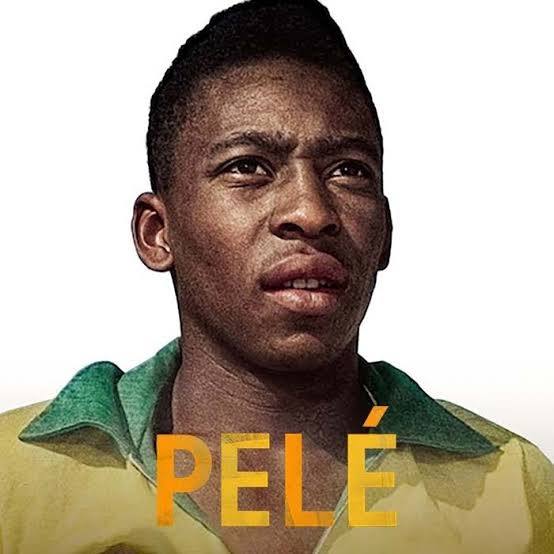
Edson Arantes do Nascimento, known universally as Pelé, was born on October 23, 1940, in Três Corações, Brazil. He became the first global football superstar and a three-time World Cup winner.
Career Overview
Pelé’s career lasted from 1956 to 1977. His club career was remarkably stable:
- Santos (1956-1974)
- New York Cosmos (1975-1977)
Unlike many modern superstars who change clubs frequently, Pelé spent nearly his entire career at Santos. He only left for the New York Cosmos late in his career to promote football in America.
Major Achievements
Pelé’s accomplishments are staggering:
- FIFA World Cup: 3 titles (1958, 1962, 1970)
- Copa Libertadores: 2 titles
- Intercontinental Cup: 2 titles
- Brazilian Championship: 6 titles
- São Paulo State Championship: 10 titles
He remains the only player to win three World Cups. This record stands alone in football history and may never be broken.
Playing Style
Pelé was a complete footballer. He could score with both feet, his head, from distance, or close range. He was fast, strong, and technically brilliant.
Standing 5’8″, he possessed remarkable athleticism. His leap was legendary—he could outjump taller defenders. His acceleration left defenders in the dust.
Beyond physical gifts, Pelé had exceptional football intelligence. He read the game beautifully and made his teammates better. He was equally dangerous as a goalscorer or creator.
Legacy
Pelé passed away on December 29, 2022, leaving behind an unmatched legacy. He won his first World Cup at just 17 years old. He became Brazil’s all-time leading scorer and a symbol of excellence.
His name became synonymous with football greatness. Three World Cup victories set a standard that defines the sport’s ultimate achievement.
Top 10 Best-Paid Players at the World
Maradona vs Pele Stats
Let’s examine the numbers that define their careers. Statistics don’t tell the complete story, but they provide crucial context for the Maradona vs Pele debate.
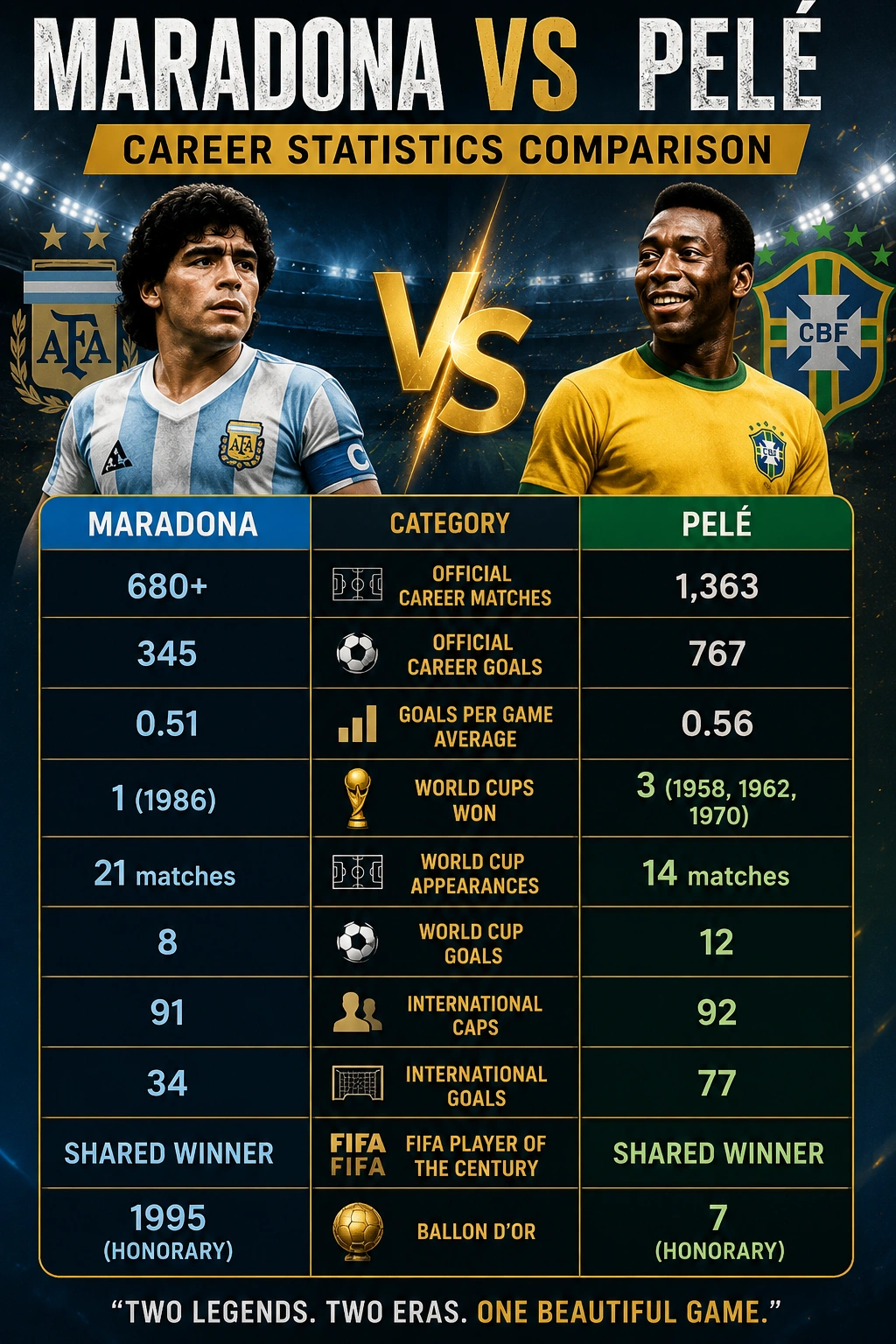
Career Statistics Comparison
| Category | Maradona | Pelé |
|---|---|---|
| Official Career Matches | 680+ | 1,363 |
| Official Career Goals | 345 | 767 |
| Goals per Game Average | 0.51 | 0.56 |
| World Cups Won | 1 (1986) | 3 (1958, 1962, 1970) |
| World Cup Appearances | 21 matches | 14 matches |
| World Cup Goals | 8 | 12 |
| International Caps | 91 | 92 |
| International Goals | 34 | 77 |
| FIFA Player of the Century | Shared Winner | Shared Winner |
| Ballon d’Or | 1995 (honorary) | 7 (honorary) |
Understanding the Numbers
Pelé played significantly more matches and scored more goals overall. His longevity at the top level was remarkable—spanning over two decades.
Maradona’s career was shorter and interrupted by injuries and personal struggles. However, his peak years showed incredible productivity and influence.
The World Cup statistics favor Pelé heavily. Three tournaments won versus one is a massive difference. However, Maradona’s 1986 performance might be the greatest individual World Cup showing ever.
Pelé’s international goal record is extraordinary—77 goals in 92 appearances. Maradona scored 34 in 91 appearances, which is still excellent but doesn’t match Pelé’s ratio.
Both received FIFA’s Player of the Century honor, reflecting the impossibility of choosing between them definitively.
One crucial note: Record-keeping in Pelé’s era was less comprehensive. Some of his goals came in friendlies and exhibition matches. Modern statistics focus on official competitive matches.
Maradona vs Pele Playing Style
Beyond statistics, how did these legends actually play? Their styles differed significantly, making direct comparison challenging.
Dribbling
Maradona: Perhaps the greatest dribbler ever. His low center of gravity, close ball control, and lightning-fast direction changes made him unstoppable. Watch his second goal against England in 1986—he dribbled past five players before scoring.
Pelé: Exceptional dribbler with more physical power. He combined skill with strength, making him difficult to dispossess. His dribbling was more direct and explosive.
Advantage: Maradona by a narrow margin
Passing and Vision
Maradona: A playmaker first, scorer second. He could thread passes through impossible spaces. His vision allowed him to see opportunities before they developed.
Pelé: Brilliant passer who combined with teammates seamlessly. He understood positioning and could deliver the perfect final ball.
Advantage: Toss-up, both were exceptional
Goal Scoring
Maradona: Scored spectacular goals but was more creator than finisher. Approximately 0.51 goals per game.
Pelé: Clinical finisher who could score any type of goal. Approximately 0.56 goals per game, with some sources claiming higher in competitive matches.
Advantage: Pelé
Creativity
Maradona: Pure imagination on the pitch. He did things that seemed impossible. His creativity was rebellious and unpredictable.
Pelé: Invented moves and techniques that became standard. His creativity was refined and effective.
Advantage: Maradona slightly
Leadership
Maradona: Led through inspiration and willpower. His teammates would run through walls for him. Captained Argentina to World Cup glory.
Pelé: Led by example through consistency and excellence. Natural leader who elevated those around him.
Advantage: Even
Big Match Performance
Maradona: Rose to the occasion in crucial moments. His 1986 World Cup is legendary. Delivered when stakes were highest.
Pelé: Three World Cup victories speak for themselves. Scored in World Cup semifinals and finals. The ultimate big-game player.
Advantage: Pelé
Argentina vs Spain Head to Head Record
World Cup Impact Comparison
The World Cup represents football’s ultimate stage. How did these legends perform when it mattered most?
Maradona’s 1986 World Cup
Maradona’s 1986 tournament in Mexico remains the gold standard for individual World Cup performance. He scored 5 goals and provided 5 assists—directly involved in 10 of Argentina’s 14 goals.
But statistics alone don’t capture his dominance. He was fouled relentlessly by desperate defenders. He carried a good but not exceptional Argentine team to the title through sheer force of will.
His quarter-final against England featured two of football’s most famous goals:
- The “Hand of God”—controversial but audacious
- The “Goal of the Century”—a magical solo run past five defenders
In the semi-final against Belgium, he scored both goals in a 2-0 victory. In the final against West Germany, he provided the winning assist.
Argentina’s 1986 victory was largely Maradona’s personal triumph. Remove him, and they likely don’t win.
Pelé’s World Cup Success
Pelé won three World Cups, an achievement that stands alone:
1958 (Age 17): Burst onto the world stage by scoring 6 goals, including two in the final. Became the youngest World Cup winner ever.
1962: Injured early in the tournament but was still awarded a winner’s medal as Brazil successfully defended their title.
1970: Considered by many the greatest team ever assembled. Pelé was the star of a Brazilian side that played beautiful, attacking football. He scored in the final and provided countless magical moments.
Pelé’s consistency across multiple tournaments demonstrated sustained excellence. He performed on the biggest stage repeatedly over 12 years.
International Team Context
This comparison requires context about their teams:
Maradona’s Argentina: Good players but heavily dependent on Maradona’s genius. Without him, they were ordinary.
Pelé’s Brazil: Surrounded by exceptional talents like Garrincha, Jairzinho, Rivelino, and Carlos Alberto. These Brazilian teams would have been strong even without Pelé.
Some argue this makes Maradona’s achievement greater—carrying a weaker team. Others contend that winning three World Cups in any context is superior.
Maradona vs Pele Who Is Better?
Now we reach the ultimate question that divides football fans globally. After examining their careers, statistics, and impact, can we definitively answer Maradona vs Pele who is better?
The Case for Maradona
Supporters of Maradona point to several compelling arguments:
Individual Brilliance: Maradona’s peak was arguably higher than any player ever. His 1986 World Cup performance was superhuman.
Carrying Teams: He took Napoli—a club that had never won Serie A—to two league titles and a UEFA Cup. He carried Argentina to World Cup glory despite a modest supporting cast.
Technical Ability: His dribbling, ball control, and creativity were unmatched. He faced brutal defending in an era with fewer protections for skilful players.
Inspiration: He gave hope to underdogs everywhere. His story resonates because he came from nothing and conquered everything through talent and determination.
The Case for Pelé
Pelé’s advocates have equally strong arguments:
Three World Cups: This achievement towers above all others. No player has matched it. Winning once is hard; winning three times is unprecedented.
Scoring Record: Over 750 official goals demonstrate unmatched consistency and longevity. He scored at an incredible rate throughout his career.
Complete Player: Pelé could do everything—score, create, defend when needed, lead, inspire. He had no weaknesses.
Global Ambassador: He made football truly global and remained dignified throughout his life. He represented the sport’s best values.
Statistical Analysis
If we focus purely on numbers, Pelé leads in:
- Total goals
- Goal-scoring rate
- World Cup victories
- International goals
- Career longevity
Maradona leads in:
- Assists per game
- Dribbles completed
- Individual match-winning performances
Peak vs. Longevity
This debate often comes down to peak performance versus sustained excellence:
Peak Performance: Maradona’s 1986 World Cup and Napoli years (1984-1990) represent perhaps the highest individual peak in football history.
Sustained Excellence: Pelé maintained elite performance for 15+ years, an extraordinary feat that demonstrates remarkable consistency.
Era Considerations
Comparing across eras is inherently problematic:
Maradona’s Era (1980s-1990s): Defending was brutal and often violent. Pitches were rougher. Protective rules were minimal. Maradona endured constant fouling.
Pelé’s Era (1950s-1970s): Also physical, but different. Tactics were less sophisticated. Defending techniques weren’t as developed. The game was more open.
Modern players benefit from better training, nutrition, and protection from referees. Both Maradona and Pelé would adapt and excel in any era.
Personal Opinion Section
As someone who has spent countless hours watching classic matches, reading player biographies, and discussing football history with fans from different generations, I’ve developed a nuanced view of the Maradona vs Pele debate.
I’ve watched Maradona’s entire 1986 World Cup multiple times. I’ve seen Pelé’s 1970 performances. I’ve studied their club careers extensively. I’ve listened to teammates, opponents, and coaches who played with or against them.
Here’s what I’ve learned: There is no objectively correct answer. Your preference reveals what you value in football.
If you prefer Maradona, you likely value:
- Individual magic and artistry
- Overcoming adversity
- Rebellion and personality
- The romantic notion of one player changing everything
- Technical skill above all else
If you prefer Pelé, you likely value:
- Winning above all else
- Consistency and professionalism
- Complete football ability
- Team success over individual brilliance
- Goal-scoring prowess
Both positions are valid. Football is subjective. The beauty is that we can appreciate both without declaring one definitively superior.
What I know for certain: We were blessed to witness both. Their legacies enrich football. The debate itself keeps their memories alive for new generations.
[IMAGE PROMPT: Interactive quiz-style graphic showing two paths – one leading to Maradona, one to Pelé, with football-themed design elements, engaging colors, modern infographic style, 16:9 ratio]
Quick Fan Test: Which Legend Fits Your Football Taste?
Let’s make this interactive. Answer these questions honestly to see which legendary player aligns with your football philosophy:
Question 1: What Matters Most?
A) Individual genius and memorable moments
B) Winning trophies and ultimate team success
Question 2: Your Ideal Player Can…
A) Dribble past five defenders and create magic from nothing
B) Score goals consistently in every type of situation
Question 3: In a Big Match, You Want…
A) One superstar who can win the game alone
B) A complete player who makes the whole team better
Question 4: Football Should Be…
A) Beautiful, artistic, and unpredictable
B) Effective, consistent, and championship-winning
Question 5: You Admire Players Who…
A) Show personality, passion, and imperfection
B) Demonstrate professionalism, class, and longevity
Results:
Mostly A’s: You appreciate Maradona’s style—individual brilliance, creative genius, and the romantic idea that one player can change everything.
Mostly B’s: You align with Pelé’s approach—complete excellence, consistent winning, and the ultimate team player who also happens to be individually brilliant.
Mixed: You’re like most football fans—able to appreciate both legends for different reasons.
This test isn’t scientific, but it helps explain why the debate persists. We all value different aspects of football, leading us to different conclusions about greatness.
[IMAGE PROMPT: Emotional black and white photograph showing fans celebrating with images of both Maradona and Pelé, capturing the passion of football fandom, documentary photography style, 16:9 ratio]
Frequently Asked Questions
Who scored more goals, Maradona or Pelé?
Pelé scored significantly more goals—approximately 767 official goals compared to Maradona’s 345. Pelé averaged 0.56 goals per game while Maradona averaged 0.51. However, Pelé played 683 more matches, and Maradona was more of a playmaker than pure scorer.
How many World Cups did Pelé win?
Pelé won three FIFA World Cups with Brazil in 1958, 1962, and 1970. He remains the only player in history to win three World Cups. This achievement is considered by many to be the strongest argument in his favor as the greatest player ever.
Did Maradona win a World Cup?
Yes, Maradona won the 1986 FIFA World Cup with Argentina in Mexico. His performance throughout that tournament is considered by many experts to be the greatest individual World Cup display in history. He scored 5 goals and provided 5 assists, directly contributing to 10 of Argentina’s 14 goals.
Maradona vs Pele who is better?
This question has no definitive answer—it depends on what you value in football. Pelé’s three World Cups, higher goal tally, and longer career favor him statistically. Maradona’s 1986 World Cup performance, superior dribbling, and ability to carry weaker teams favor him in terms of peak individual brilliance. Both are legitimate choices for greatest ever.
Who had the bigger impact on football?
Both had massive global impacts but in different ways. Pelé made football truly international in the 1960s-70s, becoming the sport’s first global superstar. Maradona showed that football could elevate someone from extreme poverty to god-like status, inspiring millions. Pelé’s impact was broader and more sustained; Maradona’s was more intense and emotional.
Was Maradona faster than Pelé?
This is difficult to measure across eras without modern timing technology. Contemporary accounts suggest both were very quick over short distances. Pelé was noted for explosive acceleration, while Maradona was quicker with the ball at his feet. Both were fast enough to beat defenders regularly.
Who was more skilful?
Skill is subjective, but most experts give Maradona a slight edge in pure technique, especially dribbling and ball manipulation. However, Pelé was more complete—combining skill with strength, aerial ability, and two-footed finishing. Maradona’s left foot was magical; Pelé was dangerous with both feet and his head.
Which player faced tougher competition?
Both faced elite competition, but the nature differed. Maradona played during the 1980s when Italian Serie A was the world’s strongest league with exceptional defenders. Pelé faced great teams in international tournaments and against top European clubs in exhibition matches. The question is essentially unanswerable across different eras.
Conclusion
The Maradona vs Pele debate represents one of football’s most fascinating conversations. After examining their careers, statistics, playing styles, and legacies, one truth becomes clear: both deserve recognition as football’s greatest players.
Pelé’s three World Cups, 767 goals, and 20+ years of sustained excellence make an overwhelming case. His completeness as a player and professional legacy remain unmatched.
Maradona’s 1986 World Cup performance, ability to carry teams, and pure technical magic represent individual brilliance at its absolute peak. His impact on Napoli and Argentina demonstrates what one player can achieve.
Rather than declaring a winner, perhaps we should celebrate that football gave us both. They played in different eras, for different teams, with different supporting casts. Direct comparison is inherently flawed.
Your preference likely reveals what you value most: winning and consistency (Pelé) or individual genius and memorable moments (Maradona). Both perspectives are valid.
The debate continues because football is subjective and emotional, not just statistical. We connect with players in different ways based on when we discovered them, what they represent, and what aspects of the game we treasure most.
One thing is certain: future generations will still debate Maradona vs Pele, keeping both legends alive in football’s collective memory. And that might be the greatest tribute of all.

2 comments