Cardio vs Weight Training What’s Better for Athletes?

Cardio vs Weight Training What’s Better for Athletes?
Picture this: You’re a young football player standing in the gym, staring at two paths. On your left, the running treadmill beckons with promises of endless endurance. On your right, rows of dumbbells wait to build your strength. You’re confused. Which one will make you a better athlete? Which one should you prioritize? This is the eternal question in sports fitness: cardio vs weight training.
The truth? This isn’t about picking a winner. Think of it like asking whether a car needs a powerful engine or good brakes. You need both to drive safely and fast. The real question isn’t which is better—it’s how to use both strategically for your specific athletic goals.
Whether you’re a runner, a footballer, a cricket player, or just someone starting their fitness journey, this guide will help you understand exactly what you need. Let’s break down the science, share real experiences, and help you make the smartest decision for your athletic performance.
What Is Cardio Training?
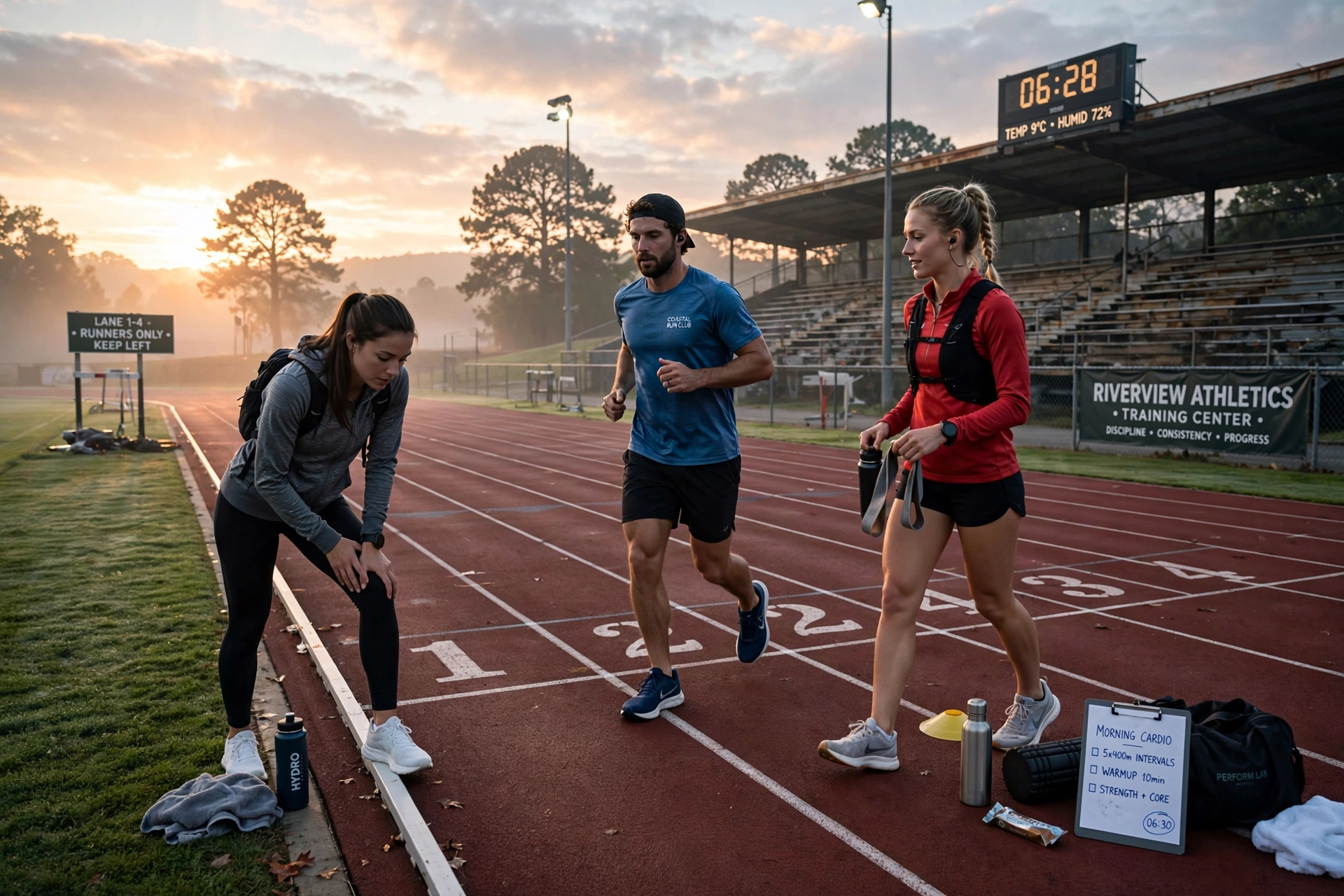
Cardio, short for cardiovascular training, is any exercise that gets your heart pumping and your lungs working hard. When you do cardio, your heart works faster to pump blood throughout your body, delivering oxygen to your muscles. Your breathing becomes heavier. Your body temperature rises.
Common forms of cardio include:
- Running (sprinting or long-distance)
- Cycling (stationary or outdoor)
- Swimming
- Jump rope
- Dancing
- Rowing
- Elliptical machine work
- HIIT (High-Intensity Interval Training)
The key thing about cardio is that it’s sustained activity. You keep moving for a period of time—anywhere from 20 minutes to several hours for endurance athletes. Your body burns calories, strengthens your heart, and improves oxygen delivery to muscles.
How cardio works: When you run or cycle, your cardiovascular system adapts. Your heart becomes more efficient at pumping blood. Your lungs improve at extracting oxygen. Your muscles learn to use that oxygen effectively. Over time, activities that once exhausted you become easier.
What Is Weight Training?
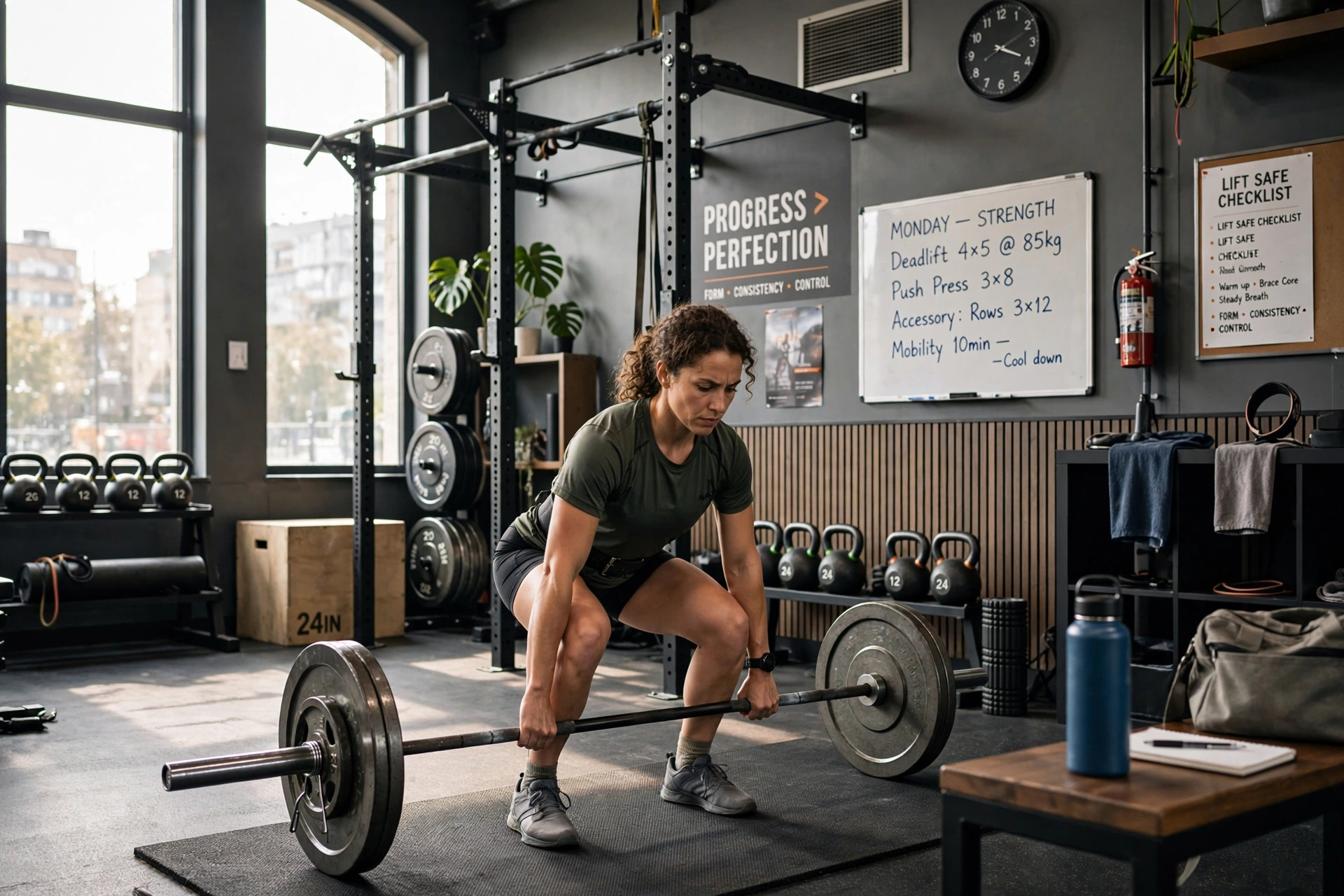
Weight training (also called resistance training or strength training) is when you use external weight—dumbbells, barbells, machines, or even your own body weight—to create resistance against your muscles. When you lift something heavy, your muscles have to work hard to move it.
Common forms of weight training include:
- Barbell exercises (squats, deadlifts, bench press)
- Dumbbell exercises (bicep curls, shoulder presses)
- Machine weights
- Bodyweight exercises (push-ups, pull-ups, squats)
- Resistance bands
- Medicine ball training
How weight training works: When you lift weights, you create tiny micro-tears in your muscle fibers. Your body then repairs these tears, building them back stronger and slightly bigger. You’re essentially saying to your muscles: “You need to be stronger to handle this challenge.” Your body responds by adapting.
Weight training builds strength, increases muscle mass, improves bone density, and boosts metabolism. It’s also excellent for preventing injuries because strong muscles protect your joints.
NBA Player Workout Routine and Body Care Guide
Benefits of Cardio for Athletes
1. Excellent Cardiovascular Health
Your heart is a muscle, and like any muscle, it improves with training. Regular cardio makes your heart stronger and more efficient. This means it pumps more blood with each beat, so it doesn’t have to work as hard. For athletes, this is crucial.
2. Improved Endurance
If you play sports like football, cricket, or basketball, you need to perform at high intensity for extended periods. Cardio training directly improves your ability to sustain effort without getting tired.
3. Burns More Calories
A 30-minute running session burns significantly more calories than 30 minutes of weight training. If weight loss is part of your goal, cardio is very efficient.
4. Better Recovery Between Efforts
In most sports, you have intense moments followed by moments of lower intensity. Cardio training improves your ability to recover quickly during these breaks.
5. Mental Toughness
Running or cycling for long periods requires mental discipline. You learn to push through discomfort, which translates to toughness in competition.
6. Low Barrier to Entry
You don’t need fancy equipment. You can run anywhere, any time. This makes cardio accessible to everyone.
7. Reduced Injury Risk from Overuse
Unlike high-impact plyometrics, steady-state cardio is generally low impact and less likely to cause joint injuries if done properly.
Benefits of Weight Training for Athletes
1. Increased Strength and Power
Weight training directly increases your ability to produce force. In sports, strength wins games. A stronger footballer jumps higher and tackles harder. A stronger cricketer hits the ball farther.
2. Muscle Development
Weight training builds muscle mass. More muscle means you can generate more power and maintain strength throughout long competitions.
3. Injury Prevention
Strong muscles stabilize joints and protect them from injury. A footballer with strong leg muscles is less likely to get an ACL injury. An athlete with a strong core is less likely to get a back injury.
4. Faster Metabolism
Muscle tissue burns calories at rest. The more muscle you have, the more calories you burn even when sitting still. This helps with weight management.
5. Bone Density
Weight training strengthens bones. This is especially important as you age and helps prevent osteoporosis.
6. Athletic Performance Gains
Studies consistently show that athletes who include weight training in their programs perform better in their sport compared to those who only do cardio.
7. Sport-Specific Movement Patterns
You can design weight training to mimic movements in your sport, making you stronger at exactly the movements you need.
8. Better Posture and Movement Quality
Proper weight training improves your movement patterns and body awareness, which translates to better athletic technique.
Cardio vs Weight Training for Different Sports
The balance you need depends entirely on what sport you play. Let’s look at different athletic disciplines:
Running and Endurance Sports
For marathon runners or distance runners, cardio is absolutely primary. However, even elite distance runners include 1-2 weight training sessions per week to prevent injuries and maintain muscle mass.
Recommended split: 80% cardio, 20% weight training
Football (Soccer)
Football requires explosive speed, powerful shots, and the ability to sustain effort for 90 minutes. Elite footballers do both extensively.
Recommended split: 60% cardio, 40% weight training
The cardio includes high-intensity interval training that mimics game demands (short bursts of sprinting followed by recovery).
Basketball
Basketball is explosive with frequent changes in direction. Players need strength for jumping and power for sprinting.
Recommended split: 50% cardio, 50% weight training
Basketball players often focus on lower body strength (squats, deadlifts) and plyometrics alongside their cardio conditioning.
Cricket
Cricket has long periods of lower intensity with explosive moments. Batsmen need power, bowlers need strength and durability.
Recommended split: 50% cardio, 50% weight training
Cricket also requires functional fitness—rotational strength, core stability, and explosive hip power.
Tennis
Tennis requires explosive movements, quick direction changes, and sustained effort. Players need both strength and endurance.
Recommended split: 55% cardio, 45% weight training
Tennis players focus heavily on core strength, leg strength for lateral movements, and explosive arm and shoulder strength.
Which Burns More Calories?
This is one of the most common questions, and the answer is: cardio wins for calorie burn, especially during the activity itself.
A 30-minute running session at a moderate pace burns approximately 300-400 calories for most people, depending on body weight and intensity.
The same 30-minute weight training session might burn 150-250 calories.
However, the full picture is more complex:
- During exercise: Cardio burns more calories.
- After exercise: Weight training has a higher “afterburn” effect. Your muscles continue to require energy for hours after your workout as they repair and recover.
- Long-term metabolism: Weight training builds muscle, which increases your resting metabolic rate—meaning you burn more calories even when sitting.
For pure calorie burning during the workout: Choose cardio.
For long-term metabolic benefits: Choose weight training.
For maximum results: Do both.
Which Builds More Athletic Performance?
Here’s where weight training takes the clear advantage for most athletes. Research consistently shows that athletes who include strength training outperform those who only do cardio.
Why?
- Strength is foundational to power. Every explosive athletic movement—jumping, sprinting, throwing—requires strength.
- Weight training improves running mechanics. Stronger athletes run faster and more efficiently.
- Injury prevention improves availability. The athlete who stays healthy all season outperforms the athlete who gets injured halfway through.
- Sport-specific adaptations. You can train movements that directly apply to your sport.
A footballer who only runs on a treadmill will be less effective than one who combines cardio with specific leg strength training for shooting and tackling.
Common Mistakes Athletes Make
Mistake 1: Choosing One and Ignoring the Other
Athletes often become dogmatic. “I’m a runner, so I only run” or “I’m a strength athlete, so I ignore cardio.” This limits performance.
Mistake 2: Doing Cardio and Weights on the Same Day Without Planning
If you run hard and then lift heavy, one or both sessions suffer. Recovery suffers. Results suffer.
Better approach: Do lighter cardio on lifting days, or separate them by several hours with proper nutrition between.
Mistake 3: Doing the Wrong Type of Cardio
Running continuously is just one type of cardio. For athletes, high-intensity interval training (HIIT) often provides better results than endless steady-state running.
Mistake 4: Neglecting Recovery
Both cardio and weight training stress your body. Improvement happens during recovery. Many athletes do too much, recover too little.
Mistake 5: Not Tracking Progress
If you don’t measure, you can’t improve. Keep records of workouts, weights lifted, times, and how you feel.
Mistake 6: Ignoring Individual Sport Demands
A linebacker doesn’t need the same training as a marathon runner. Design your program specifically for your sport.
Mistake 7: Poor Form in Weight Training
Lifting heavy with poor form causes injury and reduces effectiveness. Start light, master the movement, then add weight.
Mistake 8: Inconsistency
The best program doesn’t work if you don’t stick to it. Consistency beats perfection every time.
My Personal Experience Combining Cardio and Weight Training
When I first started playing football at university, I was a purist. I believed that running was everything. I’d do 45-60 minutes of steady running, three or four times a week. I thought weights would make me “bulky” and slow.
For the first season, I was reasonably fit. But by mid-season, I’d hit a wall. I wasn’t getting faster. My explosive movements—jumping for headers, quick sprints—weren’t improving. Meanwhile, I was watching stronger players outmuscle me in 50-50 situations. I was frustrated.
Then our club hired a new strength coach who changed everything. He convinced me to add two weight training sessions per week. The first weeks were humbling. I was sore. I felt slower in the short term. But by week four, something shifted.
My running felt different. Not slower—actually more efficient. My legs felt powerful. Movements that had required maximum effort now felt controlled. By month two, my coach said I was moving faster than before, despite lifting weights three times weekly.
What surprised me most wasn’t the strength gains (though my vertical jump increased 3 inches). It was the injury prevention. That season, I stayed completely healthy while several teammates got injured. The strength in my stabilizer muscles—all developed through weight training—protected my joints.
The lesson? I learned that cardio vs weight training isn’t about choosing one. It’s about understanding that they serve different purposes. My cardio gave me the base fitness and work capacity to train hard. My weight training gave me the power, durability, and injury resilience to perform at my best.
By the time I graduated, my ideal week was:
- Monday: Heavy lower body lifting (squats, deadlifts)
- Tuesday: High-intensity cardio interval work
- Wednesday: Upper body lifting
- Thursday: Sport-specific training (practice)
- Friday: Light recovery cardio
- Saturday: Competition
- Sunday: Active recovery or complete rest
That structure kept me fresh, strong, and healthy. It’s a template I still use today.
Simple DIY Athletic Fitness Test
Want to objectively measure your current fitness levels? Do this simple at-home test. You’ll assess both endurance and strength.
What You’ll Need:
- A stopwatch or phone timer
- A sturdy chair or bench
- A wall
- A flat open space
The Test (Takes about 15 minutes total):
Test 1: One-Minute Push-Up Test (Strength Endurance)
- Get into push-up position (hands under shoulders, body straight)
- Set a timer for 60 seconds
- Do as many push-ups as possible with good form (chest touches the ground, arms fully extend)
- Record the number
Test 2: Three-Minute Step Test (Cardiovascular Fitness)
- Use a sturdy chair or bench about 12 inches high
- Step up with right foot, then left foot (both feet on chair)
- Step down with right foot, then left foot (back to ground)
- Do this continuously for 3 minutes at a steady pace (about 24 steps per minute)
- Immediately when you finish, sit down and rest for exactly 1 minute
- After 1 minute of rest, take your pulse for 15 seconds, then multiply by 4 to get heart rate per minute
Test 3: 20-Meter Sprint (Explosive Power)
- Measure out 20 meters in a safe, flat area (or time from one end of a football field)
- Sprint as fast as possible
- Record your time
What Your Results Mean:
Push-ups in 1 minute:
- Below 20: Poor endurance strength – prioritize resistance training
- 20-40: Average – could benefit from both training types
- 40-60: Good – well-developed strength
- 60+: Excellent – maintain with consistent weight training
Heart rate after step test:
- Below 100 bpm: Excellent cardiovascular fitness
- 100-120 bpm: Good fitness
- 120-140 bpm: Average fitness – would benefit from cardio training
- 140+ bpm: Lower cardiovascular fitness – start with steady cardio
20-meter sprint:
- 3.5 seconds or faster: Excellent explosiveness
- 3.5-4.0 seconds: Good
- 4.0-4.5 seconds: Average
- 4.5+ seconds: Work on explosive power through plyometrics and weight training
What to Do With Your Results:
If your cardiovascular score is weak but strength is good: Add 2-3 cardio sessions weekly.
If your strength is weak but cardio is good: Add 2 weight training sessions weekly.
If both are weak: Start with a balanced approach—alternate days.
Retest yourself every 4 weeks to track progress.
Frequently Asked Questions
Q1: Is cardio better than weight training for athletes?
A: No. They serve different purposes. Cardio builds endurance and heart health. Weight training builds strength and prevents injury. Elite athletes use both. The balance depends on your sport, but most athletes benefit from doing both.
Q2: Should athletes do cardio and weights on the same day?
A: You can, but they should be structured properly. Do one intense session per day, not two hard sessions back-to-back. For example: heavy lifting in the morning, light recovery cardio in evening. Or lift one day, hard cardio the next day.
Q3: How many days per week should athletes lift weights?
A: Most athletes benefit from 3-4 weight training days per week. This allows enough stimulus for muscle adaptation while leaving time for cardio and recovery. Beginners can start with 2-3 days weekly.
Q4: Does cardio reduce muscle growth?
A: Excessive steady-state cardio without proper nutrition can interfere with muscle building. However, moderate cardio (3-4 sessions weekly) doesn’t negatively impact muscle growth if you eat enough protein. The key is balance and nutrition.
Q5: Which one is better for weight loss?
A: Cardio burns more calories during the workout itself. However, weight training builds muscle, which increases resting metabolism. For sustainable weight loss, combine both with proper nutrition.
Q6: Can I just do HIIT instead of both steady cardio and weights?
A: HIIT is excellent and saves time, but it’s not a complete replacement. HIIT provides cardiovascular benefits and some strength stimulus, but dedicated weight training provides specific strength adaptations that HIIT doesn’t fully replicate.
Q7: At what age should athletes start weight training?
A: With proper supervision and technique, athletes can start weight training at age 12-13. Start with bodyweight and light weights, focusing on form. Professional coaching is essential to prevent injury.
Q8: How do I know if I’m doing too much cardio?
A: Signs include persistent fatigue, decreased performance, getting sick frequently, difficulty recovering, and elevated resting heart rate. If experiencing these, reduce cardio volume by 20-30% and prioritize recovery.
Final Verdict
After reviewing the science, examining different sports, and sharing real experience, here’s the truth about cardio vs weight training: This isn’t an “either-or” question. It’s a “how much of each” question.
For most athletes, the optimal approach is:
- Base your program on your sport. A runner emphasizes different ratios than a footballer, who’s different from a cricketer.
- Prioritize weight training for performance gains. Strength is foundational to athletic power. Most athletes underemphasize this.
- Include cardio for durability. Your cardiovascular system needs conditioning to sustain effort through competition.
- Separate hard sessions. Don’t do two intense sessions in one day unless specifically programmed.
- Track progress. Measure what matters to your sport and monitor improvement over weeks and months.
- Prioritize recovery. The training happens during workouts, but improvement happens during recovery.
The athletes who perform best aren’t the ones who do one type of training “perfectly.” They’re the ones who intelligently combine both, tailored to their specific sport and goals.
Your next step? Assess your current training. Does it match your sport? Are you neglecting one type? Design a program that includes both cardio and weight training in proportions that make sense for what you’re trying to achieve.
The answer isn’t cardio or weights. The answer is both, done intelligently.



Post Comment