World Cup 2026 Stadium Guide: Full List of All 16 Venues
World Cup 2026 Stadium Guide: Every Venue You Need to Know
The 2026 FIFA World Cup is set to be the biggest football tournament in history — and a major reason for that is the sheer scale and variety of the stadiums hosting it. For the first time ever, three nations are co-hosting the World Cup: the United States, Mexico, and Canada. Spread across 16 iconic venues, the tournament will give fans across North America a once-in-a-lifetime experience. Top 10 The Best Football Players in the World 2026
Whether you’re planning to attend a match, following your national team’s journey, or simply a football enthusiast wanting to know more, this complete World Cup 2026 stadium guide breaks down every venue — from the legendary Estadio Azteca to the modern architectural marvel that is SoFi Stadium.
Let’s dive in.
Why the 2026 World Cup Is Unlike Any Other
The 2026 FIFA World Cup will feature 48 national teams — up from the previous 32 — meaning more matches, more drama, and more cities in the spotlight. The 16 host stadiums span three countries and represent some of the most iconic sporting arenas on the planet. Combined, they hold well over one million seats, making this the most expansive World Cup ever staged. The Best Soccer Team in the World
Now, let’s explore each stadium, from the largest to the smallest.
1. Estadio Azteca — Mexico City, Mexico
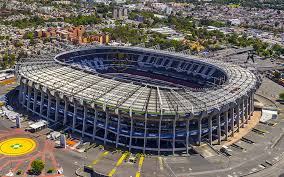
Capacity: 87,523
There’s no stadium on this list with more football history than Estadio Azteca. Located in Mexico City, the Azteca is the only venue in the world to have hosted two FIFA World Cup finals — in 1970 and 1986. It was here that Diego Maradona scored both the infamous “Hand of God” goal and the “Goal of the Century” against England in 1986.
Now, in 2026, Azteca will make history again by hosting the opening match of the tournament — becoming the first stadium to host three separate World Cups. That achievement alone cements its place as the spiritual home of football in the Americas. Lamine Yamal vs Harry Kane Who Is Better
The stadium sits at an altitude of over 2,200 meters above sea level, which historically gives the Mexican national team a significant home advantage and makes it one of the most demanding venues for visiting players.
| Detail | Info |
|---|---|
| Location | Mexico City, Mexico |
| Capacity | 87,523 |
| Year Opened | 1966 |
| World Cups Hosted | 1970, 1986, 2026 |
| Notable Moment | Maradona’s “Goal of the Century” (1986) |
2. MetLife Stadium — East Rutherford, New Jersey, USA
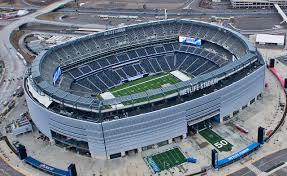
Capacity: 82,500
MetLife Stadium, located just outside New York City in New Jersey, is set to host the 2026 World Cup Final — arguably the most significant match in the tournament. Home to both the New York Giants and New York Jets of the NFL, MetLife is a state-of-the-art open-air stadium that regularly hosts some of the biggest events in American sports. Lamine Yamal vs Mbappé Who Is Actually Better
With a capacity of 82,500, it’s the second-largest stadium on this list and easily the most high-profile venue for international visitors given its proximity to New York City — one of the most visited cities in the world. Fans attending the final will have the entire New York metropolitan experience at their fingertips.
| Detail | Info |
|---|---|
| Location | East Rutherford, New Jersey, USA |
| Capacity | 82,500 |
| Year Opened | 2010 |
| Home Teams | NY Giants, NY Jets (NFL) |
| 2026 Role | World Cup Final Host |
3. AT&T Stadium — Arlington, Dallas, USA
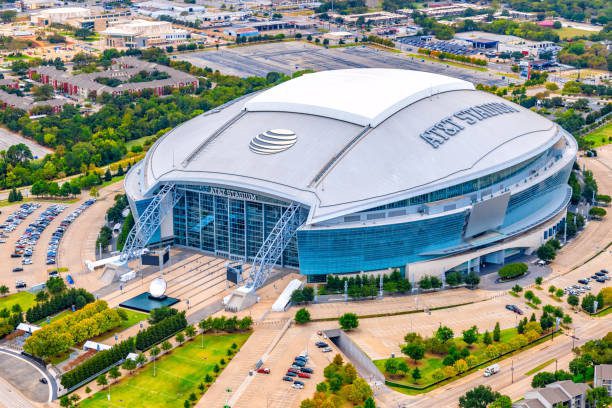
Capacity: 80,000
Known as “Jerry’s World” after Dallas Cowboys owner Jerry Jones, AT&T Stadium is one of the most iconic sporting venues in the United States. With a retractable roof and one of the largest high-definition video boards in the world, AT&T Stadium blends Texas-sized ambition with cutting-edge technology.
Its 80,000-seat capacity makes it one of the largest NFL venues in the country, and it has already proven it can handle major international events — including boxing world championships and college football playoff games.
| Detail | Info |
|---|---|
| Location | Arlington, Dallas, USA |
| Capacity | 80,000 |
| Year Opened | 2009 |
| Home Team | Dallas Cowboys (NFL) |
| Notable Feature | Retractable roof, massive HD video board |
4. GEHA Field at Arrowhead Stadium — Kansas City, USA
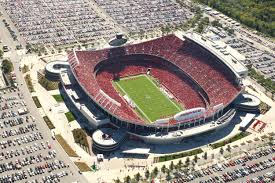
Capacity: 76,416
Arrowhead Stadium is one of the loudest stadiums in the world — officially holding the Guinness World Record for the loudest outdoor stadium crowd noise. Home to the Kansas City Chiefs, back-to-back Super Bowl champions, Arrowhead has an electric atmosphere that will translate beautifully to World Cup football.
Kansas City itself is a passionate sports city, and the chance to host World Cup matches has brought immense excitement to the region.
| Detail | Info |
|---|---|
| Location | Kansas City, Missouri, USA |
| Capacity | 76,416 |
| Year Opened | 1972 |
| Home Team | Kansas City Chiefs (NFL) |
| Notable Feature | World record for loudest crowd noise |
5. NRG Stadium — Houston, USA
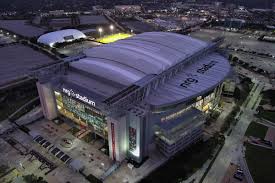
Capacity: 72,220
NRG Stadium is unique among the 2026 venues in that it has a fully retractable roof, making it fully weather-controlled regardless of Houston’s famously hot and humid climate. This is a crucial feature for a summer World Cup tournament in Texas.
Home to the Houston Texans of the NFL, NRG has hosted Super Bowls and major concert events. Its flexibility and climate control make it one of the most player-friendly venues of the entire tournament.
| Detail | Info |
|---|---|
| Location | Houston, Texas, USA |
| Capacity | 72,220 |
| Year Opened | 2002 |
| Home Team | Houston Texans (NFL) |
| Notable Feature | Fully retractable roof |
6. Mercedes-Benz Stadium — Atlanta, USA
Capacity: 71,000
Mercedes-Benz Stadium is widely regarded as one of the finest sports venues in the world. Its stunning halo roof — designed to open and close like a camera aperture — is an architectural achievement unlike any other. Home to both the Atlanta Falcons (NFL) and Atlanta United (MLS), it’s one of the few NFL stadiums to also regularly host top-tier football (soccer).
Atlanta United’s passionate fanbase means the city already has a strong football culture, making it a natural fit for World Cup action.
| Detail | Info |
|---|---|
| Location | Atlanta, Georgia, USA |
| Capacity | 71,000 |
| Year Opened | 2017 |
| Home Teams | Atlanta Falcons (NFL), Atlanta United (MLS) |
| Notable Feature | Iconic halo roof design |
7. SoFi Stadium — Inglewood, Los Angeles, USA
Capacity: 70,240
SoFi Stadium is the most expensive stadium ever built, costing approximately $5.5 billion. Located in Inglewood near Los Angeles, it features a spectacular translucent roof and a dual-sided video board that stretches the length of the field. LA is already one of the world’s great football cities, home to LAFC and LA Galaxy, so the World Cup coming to SoFi is a massive moment for the region.
Los Angeles was also a host city for the 1994 World Cup, meaning it gets to relive that magic over three decades later.
| Detail | Info |
|---|---|
| Location | Inglewood, Los Angeles, USA |
| Capacity | 70,240 |
| Year Opened | 2020 |
| Home Teams | LA Rams, LA Chargers (NFL) |
| Notable Feature | Most expensive stadium ever built ($5.5B) |
8. Lincoln Financial Field — Philadelphia, USA
Capacity: 69,796
“The Linc,” home to the Philadelphia Eagles, is one of the most passionate fan bases in all of American sport. Philadelphia’s footballing culture runs deep, and hosting World Cup matches at Lincoln Financial Field will bring the city to life.
The stadium’s open design creates a fantastic atmosphere and sits in the South Philadelphia Sports Complex alongside Citizens Bank Park and Wells Fargo Center.
| Detail | Info |
|---|---|
| Location | Philadelphia, Pennsylvania, USA |
| Capacity | 69,796 |
| Year Opened | 2003 |
| Home Team | Philadelphia Eagles (NFL) |
| Notable Feature | One of America’s most passionate fan atmospheres |
9. Lumen Field — Seattle, USA
Capacity: 69,000
Lumen Field is home to the Seattle Seahawks (NFL) and Seattle Sounders (MLS). The Sounders are one of the most successful and well-supported MLS clubs, meaning Seattle already has a thriving football culture. Lumen Field’s compact, steep design creates a phenomenal sound environment — it has been called one of the loudest stadiums in the NFL.
The Pacific Northwest backdrop and vibrant city culture make Seattle one of the most exciting host cities in the tournament.
| Detail | Info |
|---|---|
| Location | Seattle, Washington, USA |
| Capacity | 69,000 |
| Year Opened | 2002 |
| Home Teams | Seattle Seahawks (NFL), Seattle Sounders (MLS) |
| Notable Feature | One of the loudest NFL stadiums in the US |
10. Levi’s Stadium — Santa Clara, USA
Capacity: 68,500
Home to the San Francisco 49ers, Levi’s Stadium is a modern, LEED Gold certified venue that prioritizes sustainability alongside comfort. Located in Silicon Valley, it sits at the heart of the global technology industry — a fitting home for some of the most watched football matches on the planet.
The Bay Area has a large and passionate football fanbase, with many international communities that will bring incredible atmosphere to World Cup matches.
| Detail | Info |
|---|---|
| Location | Santa Clara (San Francisco Bay Area), USA |
| Capacity | 68,500 |
| Year Opened | 2014 |
| Home Team | San Francisco 49ers (NFL) |
| Notable Feature | LEED Gold certified — sustainability focused |
11. Gillette Stadium — Foxborough, USA
Capacity: 65,878
Gillette Stadium, home of the New England Patriots and New England Revolution, sits just outside Boston in Foxborough. The Revolution are one of MLS’s founding clubs, and New England has a large football following. The stadium’s intimate feel and New England’s proud sporting culture make it a fantastic selection.
Boston is also one of the most international cities in the US, home to large diaspora communities that will add colour and passion to match days.
| Detail | Info |
|---|---|
| Location | Foxborough, Massachusetts, USA |
| Capacity | 65,878 |
| Year Opened | 2002 |
| Home Teams | New England Patriots (NFL), New England Revolution (MLS) |
| Notable Feature | Home to one of the NFL’s most successful franchises |
12. Hard Rock Stadium — Miami Gardens, USA
Capacity: 64,767
Hard Rock Stadium is one of the most versatile venues in American sport, having hosted Super Bowls, Formula 1 races (the Miami Grand Prix), and major college football events. Home to the Miami Dolphins, the stadium sits in one of the most culturally diverse cities in the world.
Miami’s Latin American heritage means the city will be electrifying during the World Cup, with fans from across Central and South America creating a unique festival atmosphere.
| Detail | Info |
|---|---|
| Location | Miami Gardens, Florida, USA |
| Capacity | 64,767 |
| Year Opened | 1987 (renovated 2016) |
| Home Team | Miami Dolphins (NFL) |
| Notable Feature | Also hosts Formula 1 Miami Grand Prix |
13. BC Place — Vancouver, Canada
Capacity: 54,500
BC Place is Canada’s premier football stadium, home to the Vancouver Whitecaps of MLS. It features a retractable roof that is essential for Vancouver’s famously rainy climate. The stadium sits in the heart of downtown Vancouver, one of Canada’s most scenic and diverse cities.
Vancouver was also a host city for the 2015 FIFA Women’s World Cup, so the city has valuable experience staging major international football tournaments.
| Detail | Info |
|---|---|
| Location | Vancouver, British Columbia, Canada |
| Capacity | 54,500 |
| Year Opened | 1983 (renovated 2011) |
| Home Team | Vancouver Whitecaps (MLS) |
| Notable Feature | Retractable roof, downtown location |
14. Estadio BBVA — Monterrey, Mexico
Capacity: 53,500
Estadio BBVA is widely considered one of the most beautiful stadiums in Latin America. Home to Club de Fútbol Monterrey, it sits at the foot of the Cerro de la Silla mountain, offering a breathtaking backdrop that makes it unlike any other venue in this World Cup.
Monterrey is Mexico’s industrial capital and a deeply passionate football city. The atmosphere at BBVA on a big match day is truly something special.
| Detail | Info |
|---|---|
| Location | Monterrey, Nuevo León, Mexico |
| Capacity | 53,500 |
| Year Opened | 2015 |
| Home Team | CF Monterrey (Liga MX) |
| Notable Feature | Mountain backdrop — one of the most scenic stadiums in the world |
15. Estadio Akron — Guadalajara, Mexico
Capacity: 49,850
Estadio Akron, home to Club Deportivo Guadalajara (Chivas), is one of Mexico’s most modern stadiums. Guadalajara is the birthplace of mariachi music and tequila, and it holds a special place in Mexican football culture — Chivas are the only Mexican top-flight club that fields exclusively Mexican players, making them a symbol of national pride.
The stadium’s striking design and the city’s passionate football identity make Estadio Akron an exciting addition to the lineup.
| Detail | Info |
|---|---|
| Location | Guadalajara, Jalisco, Mexico |
| Capacity | 49,850 |
| Year Opened | 2010 |
| Home Team | CD Guadalajara / Chivas (Liga MX) |
| Notable Feature | Home to Mexico’s most iconic domestic club |
16. BMO Field — Toronto, Canada
Capacity: 30,000
BMO Field is the smallest venue in the 2026 World Cup but makes up for its size with atmosphere and location. Home to Toronto FC of MLS, it sits on the shores of Lake Ontario in one of the most multicultural cities in the world. Toronto’s extraordinary diversity means fans from virtually every competing nation will be cheering from the stands.
While it is the most intimate venue of the tournament, BMO Field has undergone expansions and improvements in preparation for 2026, ensuring it delivers a world-class experience.
| Detail | Info |
|---|---|
| Location | Toronto, Ontario, Canada |
| Capacity | 30,000 |
| Year Opened | 2007 |
| Home Team | Toronto FC (MLS) |
| Notable Feature | Smallest venue, most multicultural city |
Complete Stadium List at a Glance
| # | Stadium | Location | Capacity |
|---|---|---|---|
| 1 | Estadio Azteca | Mexico City, Mexico | 87,523 |
| 2 | MetLife Stadium | New Jersey, USA | 82,500 |
| 3 | AT&T Stadium | Dallas, USA | 80,000 |
| 4 | GEHA Field at Arrowhead Stadium | Kansas City, USA | 76,416 |
| 5 | NRG Stadium | Houston, USA | 72,220 |
| 6 | Mercedes-Benz Stadium | Atlanta, USA | 71,000 |
| 7 | SoFi Stadium | Los Angeles, USA | 70,240 |
| 8 | Lincoln Financial Field | Philadelphia, USA | 69,796 |
| 9 | Lumen Field | Seattle, USA | 69,000 |
| 10 | Levi’s Stadium | Santa Clara, USA | 68,500 |
| 11 | Gillette Stadium | Foxborough, USA | 65,878 |
| 12 | Hard Rock Stadium | Miami Gardens, USA | 64,767 |
| 13 | BC Place | Vancouver, Canada | 54,500 |
| 14 | Estadio BBVA | Monterrey, Mexico | 53,500 |
| 15 | Estadio Akron | Guadalajara, Mexico | 49,850 |
| 16 | BMO Field | Toronto, Canada | 30,000 |
Frequently Asked Questions (FAQ)
Q: How many stadiums will host the 2026 FIFA World Cup?
A: A total of 16 stadiums across three countries — the United States (11 venues), Mexico (3 venues), and Canada (2 venues) — will host matches at the 2026 FIFA World Cup.
Q: Which stadium will host the 2026 World Cup Final?
A: The 2026 FIFA World Cup Final is scheduled to be held at MetLife Stadium in East Rutherford, New Jersey, just outside New York City.
Q: Which is the largest stadium at the 2026 World Cup?
A: Estadio Azteca in Mexico City is the largest stadium at the 2026 World Cup, with a capacity of 87,523.
Q: Which stadium will host the opening match of the 2026 World Cup?
A: Estadio Azteca in Mexico City is set to host the opening match of the 2026 FIFA World Cup, making it the first stadium in history to host matches at three separate World Cups (1970, 1986, 2026).
Q: Which is the smallest stadium at the 2026 World Cup?
A: BMO Field in Toronto, Canada, is the smallest venue, with a capacity of 30,000 seats.
Q: How many US cities are hosting the 2026 World Cup?
A: Eleven cities across the United States will host 2026 World Cup matches: New York/New Jersey, Dallas, Kansas City, Houston, Atlanta, Los Angeles, Philadelphia, Seattle, San Francisco Bay Area, Boston, and Miami.
Q: Will any 2026 World Cup stadiums have roofs?
A: Yes, several stadiums feature retractable or fixed roofs: NRG Stadium (Houston), AT&T Stadium (Dallas), Mercedes-Benz Stadium (Atlanta), BC Place (Vancouver), and SoFi Stadium (Los Angeles) all have retractable or covered roof systems.
Q: Is Estadio Azteca being renovated for the 2026 World Cup?
A: Yes, Estadio Azteca underwent significant renovation and modernization work ahead of the 2026 World Cup to meet FIFA’s standards and improve facilities for players and fans.
Final Thoughts
The 2026 FIFA World Cup is shaping up to be the most spectacular tournament in the history of the sport. With 16 world-class stadiums, three host nations, and 48 competing teams, the scale of the event is truly unprecedented. From the historic Estadio Azteca — a venue steeped in football legend — to the futuristic SoFi Stadium and the breathtaking mountain backdrop of Estadio BBVA, every venue brings something unique to the table.
Whether you’re lucky enough to attend in person or following every match from home, knowing these stadiums and what makes each of them special will deepen your appreciation of the 2026 World Cup experience. Mark your calendar — the world’s game is coming to North America, and it’s going to be unforgettable.
#World Cup 2026 Stadium Guide#World Cup 2026 Stadium Guide#World Cup 2026 Stadium Guide#World Cup 2026 Stadium Guide#World Cup 2026 Stadium Guide#World Cup 2026 Stadium Guide#World Cup 2026 Stadium Guide#World Cup 2026 Stadium Guide#World Cup 2026 Stadium Guide#World Cup 2026 Stadium Guide#World Cup 2026 Stadium Guide#World Cup 2026 Stadium Guide



3 comments